
3 min read - 12 Dec, 2025
Policy instability is holding industry back, manufacturers tell MPs
Manufacturing leaders from across the UK gathered in Westminster to deliver a clear message to Members of Parliament: “We are ambitious and ready to invest, but the absence of long-term policy stability and a credible Industrial Strategy is holding us back.”
More than 120 members of Made in Group, a UK membership network for manufacturing and engineering businesses, attended the annual ‘Backing Britain’ Parliamentary reception to discuss the opportunities and mounting pressures facing the sector.
In his address, Lord Whitby, chairman of Made in Group, stated the need to challenge long-held assumptions about the sector’s value. He noted that manufacturing’s economic contribution is routinely understated, despite independent research from Oxford University demonstrating its true scale.
“Manufacturing contributes far more to UK GDP than the commonly cited 10%. When indirect and induced contributions are included, the sector accounts for 23%. Yet it still does not receive the recognition it deserves, with many continuing to downplay its significance.”
Lord Whitby urged parliamentarians and policymakers to acknowledge the full capabilities embedded within the UK’s manufacturing community so the sector can continue to drive growth and prosperity across the country.
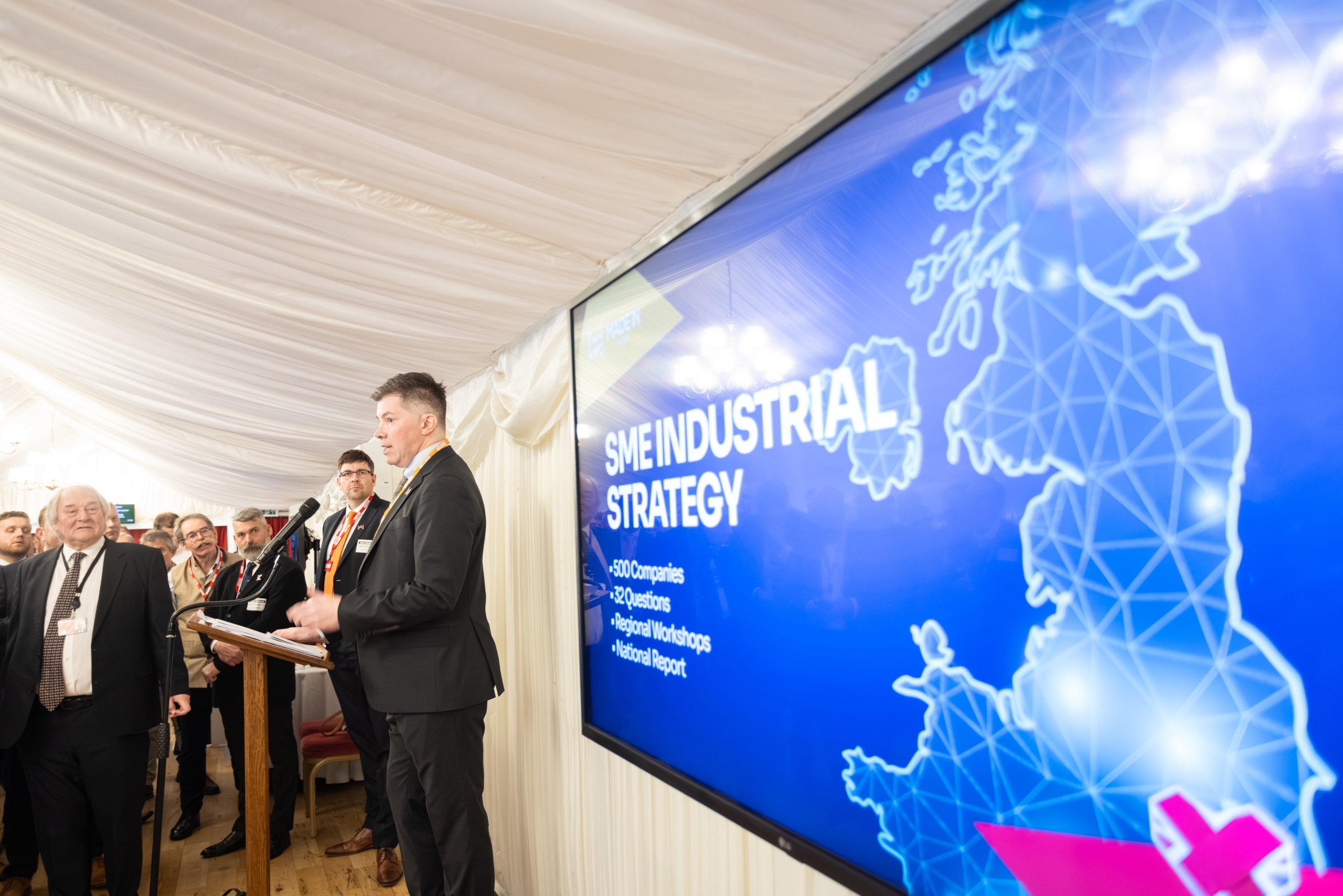
More than 120 members of Made in Group attended the annual ‘Backing Britain’ Parliamentary reception to discuss the opportunities and mounting pressures facing the sector / Picture: Made in Group
Jason Pitt, CEO of Made in Group, used his speech to share headline findings from the organisation’s SME Policy Survey. He highlighted widespread concern about the UK’s ability to retain strategic assets, with 97% of manufacturing leaders saying the UK does not apply enough scrutiny to the national or strategic implications of overseas acquisitions.
Most concerning, he continued, is that just 1% of the manufacturing community believes the current Industrial Strategy will work, pointing to a system heavily shaped by multinationals and organisations outside of manufacturing. He also underscored the growing skills crisis, referencing the many Made members who could increase output if they could more easily secure the technical talent they need.
“Despite these and many other challenges, manufacturers remain committed to investment and growth. They are continuing to automate, innovate, hire and expand,” Jason said. “But the pressure points are intensifying. Energy costs, regulatory chop and change, inflation, employment costs and increased compliance requirements are all undermining confidence.”
He referenced examples such as the Carbon Border Adjustment Mechanism (CBAM) and supply barriers that create unavoidable costs for manufacturers. “It is illogical to penalise British companies for structural gaps in the UK supply chain. We cannot keep creating systems that disadvantage our own industrial base.”
He closed with a call on MPS to work in partnership with manufacturers, particularly small and family-owned firms, to create a more predictable, credible business environment.
“What manufacturers are telling us loud and clear is they want long-term certainty. They don’t want policy shifts every two years. They don’t want budgets every six months. And they don’t want new schemes that simply replace old schemes. They just want a stable direction that allows them to plan. Manufacturers are ready to invest. They just need the ground to stop moving underneath them.”
