
4 min read - 31 Mar, 2026
Food and drink export values reach record high in 2025
The Food and Drink Federation’s (FDF) 2025 Trade Snapshot reveals that UK food and drink exports experienced record value growth last year. Exports reached £25.6bn – the highest value on record – having grown 4.8% year-on-year. Meanwhile, imports also reached a historic high of £66.9bn, up 5.9% compared to 2024.
Export volumes fail to recover to pre-Brexit levels
However, in volume terms, the picture is less positive. Food and drink exports have failed to return to the highs they saw before the UK’s exit from the EU. On a global scale, there was some recovery compared to 2024, with food export volumes increasing 6% to 8.9bn kg, but this is over a quarter (27%) lower than in 2019.
In particular, EU food export volumes are still nearly a third (31%) lower in 2025 than in 2019. This is because of the added complexity that businesses face when trading with the EU. The Sanitary and Phytosanitary (SPS) Agreement, due to come into force in mid-2027, aims to revitalise exports by removing the additional checks and certification businesses have faced when trading with the EU. But for this to have its intended outcome, government must prioritise providing businesses with the right support to prepare for this regulatory change.
Meanwhile, ‘non-SPS’ products – which will only see very limited benefits from the agreement – like chocolate, biscuits and breakfast cereals, have seen some of the steepest declines in exports over the past five years compared to the five years prior to Brexit. This shows there’s more to be done to support the UK’s 12,000 food and drink manufacturers and revitalise exports to the EU – such as more accessible customs guidance and practical support for businesses, both via the government’s overseas network and through available support in the UK.
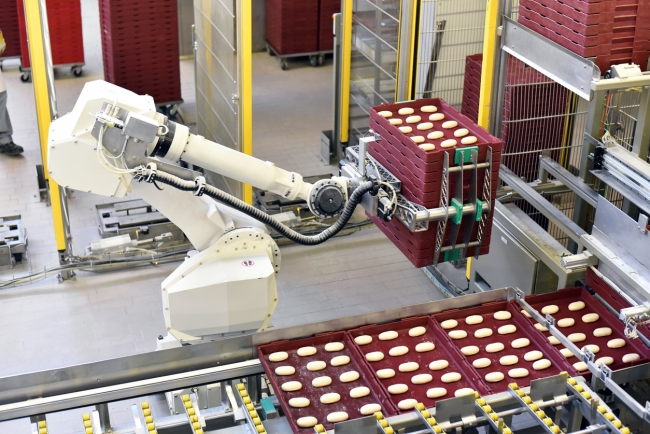
The value of UK food and drink exports rose to a record high in 2025, reaching £25.6bn, according to FDF’s Trade Snapshot.
Turbulence and tariffs
The additional tariffs imposed by the US in the second half of 2025 had a significant impact on global supply chains. The UK’s exports to the US dropped 8.9% in H2 2025 compared to H2 2024. This is a stark contrast to the 18.1% rise in the first half of 2025, before the full impact of the new tariff regime.
Aside from the UK’s exports, US tariffs have changed global trading patterns. For example, Chinese exports to the US fell 21.5% in 2025, while the UK’s imports from China grew 11.6%. Chinese exports to India and Turkey also surged by 78.6% and 67.1% respectively, as Chinese suppliers redirected food and drink exports to alternative markets.
The current conflict in the Middle East is bringing further turbulence to the global trade outlook. Food and drink manufacturers are already facing higher costs, including transport and logistics costs, which will impact product pricing and competitiveness, as well as a decline in sales to the region. The level of disruption to supply chains is still unclear and adding further uncertainty, but likely to become more apparent in the coming months.
Global opportunities
UK food and drink businesses have gained momentum in growing markets across the world. Export growth was seen across fast-growing economies like Indonesia (52.0%), Colombia (153.7%) and India (12.4%). Food exports to members of the Comprehensive and Progressive Agreement for Trans-Pacific Partnership (CPTPP) increased 7.8% in volume terms in 2025 following the UK’s accession to the trade bloc in December 2024. With Indonesia, Uruguay and the Philippines all prospective members, there could be further opportunities for the UK in the pipeline.
At the same time, the UK’s non-EU food imports are growing faster than those from the EU. Non-EU imports now make up 30.9% of the UK’s total imports, increasing from 29.3% in 2024, driven by countries like Brazil and Canada.

While exports increased 6% in volume terms, food and drink exports are still below their pre-Brexit peak.
Karen Betts, chief executive, FDF, said: “British food and drink is sought after worldwide – it is known for its high quality, innovation, and connection to our cultural heritage. It’s good to see some British products flying in overseas markets, and others holding their own in tough trading conditions. But rising production costs, tariffs and behind-the-border barriers, as well as worsening household budgets in some markets, mean that real export growth continues to be challenging. Conflict in the Middle East only makes this harder.
“With export volumes still far from pre-Brexit levels, the government needs to step up and support exporters to enter and become established in global markets. The EU SPS agreement won’t be easy, with some businesses needing to reconfigure their supply chains, so ensuring that every UK food and drink business understands the regulatory changes ahead is vital – whether they trade with the EU or not.”
Restoring exports
Food and drink manufacturing is well placed to support the government’s ambitions to drive economic growth across the UK. But with cost pressures rising for businesses, it’s vital that government takes action to restore exports to pre-Brexit levels in order to accelerate growth opportunities for manufacturers and help them find new customers and ingredient suppliers abroad.
Government can do this by providing the clarity and support businesses need to ensure that the SPS agreement with the EU is a success, and by continuing to maintain momentum where it has made gains across the rest of the world.
FDF is calling for government to support its ambition to grow UK food and drink exports by £10bn in the next decade. To do this, it is urging government to make a £2.6m investment to replicate Scottish and Welsh SME export support at a UK-wide level. This could include expanding government support for SMEs to attend targeted key trade shows or facilitating ‘meet the buyer’ events.
