

7 minute read • published in partnership with Lloyds
Doing things the right way – How Astonish turned a £22m investment into £70m growth
Astonish’s latest phase of growth shows what’s possible with bold, long-term investment. Since relocating to a purpose-built factory, the UK-based vegan and cruelty-free cleaning brand has doubled revenue to £70m without increasing headcount – while helping raise the bar for ethical manufacturing.
Astonish has come a long way since its founder first sold oven cleaner door to door in the 1960s. Today, it manufactures more than 80 cleaning and personal care products, supplying major supermarkets and high street retailers in the UK and overseas.
Still family-owned and based in West Yorkshire, the company maintains a firm stance on ethical production, holding both Cruelty Free International’s Leaping Bunny certification and accreditation from The Vegan Society – standards that apply not just to its products but how they’re made.
By 2019, however, rising demand had begun to outstrip the capacity of its original site. The company was operating close to physical limits, with little room for expansion and growing inefficiencies across the factory floor. The decision to relocate to a new purpose-built factory proved to be a bold turning point – bringing R&D, manufacturing and packaging all under one roof.
And when the pandemic sent demand for hygiene products soaring, it only reinforced the decision to invest, automate and futureproof for the long term.
A factory designed to scale
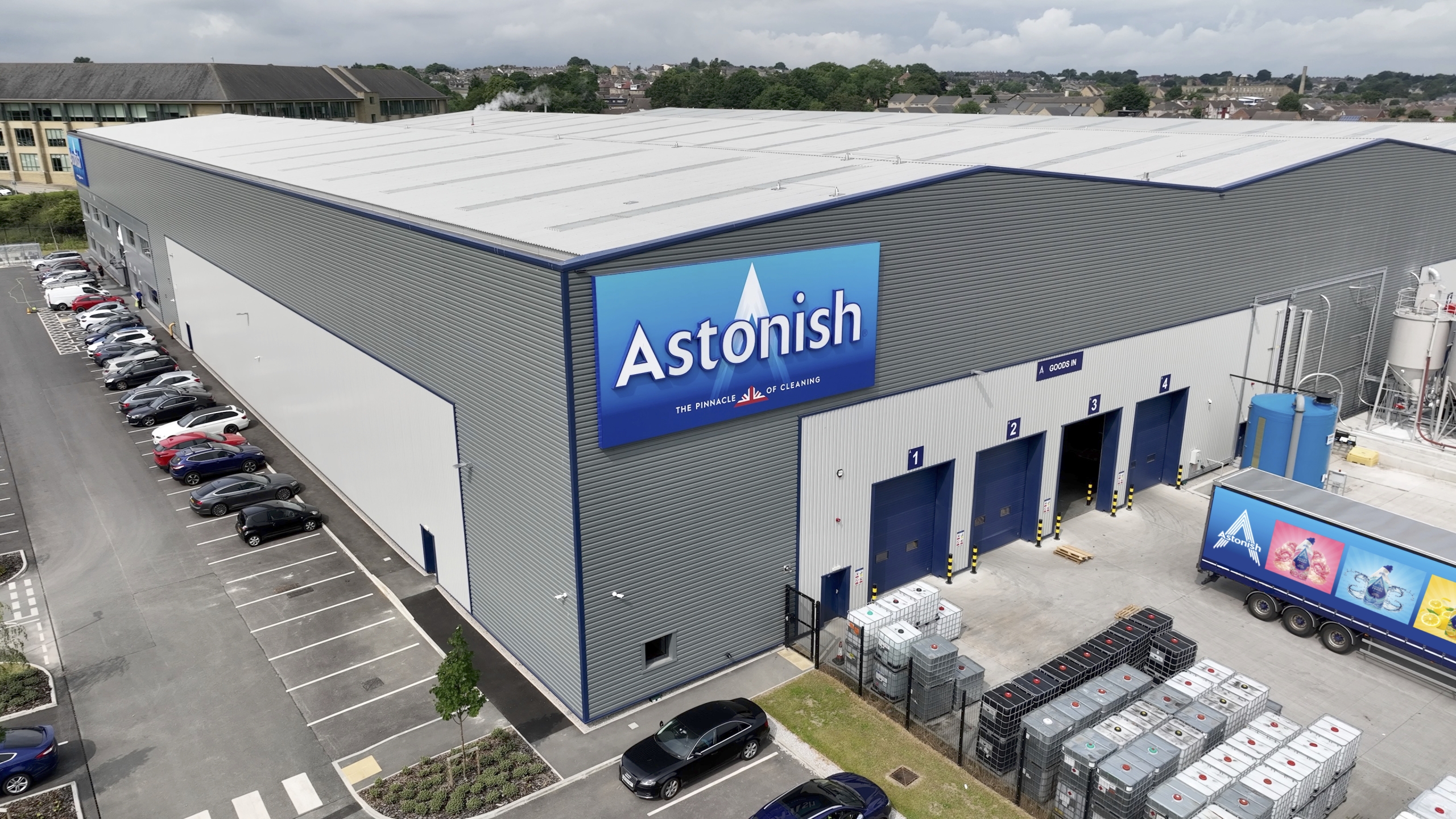
“Moving to the new site was a major step forward, and it wouldn’t have happened without the support of Lloyds.” says Mike Earnshaw, General Manager. Opened in 2022, the 135,000 sq ft facility (more than twice the size of the company’s previous premises) provided a valuable chance to re-engineer operations from the ground up.
Located three miles away on a brownfield plot, the move minimised disruption for staff while establishing Astonish as the anchor tenant in a new enterprise zone on the Leeds-Bradford border.
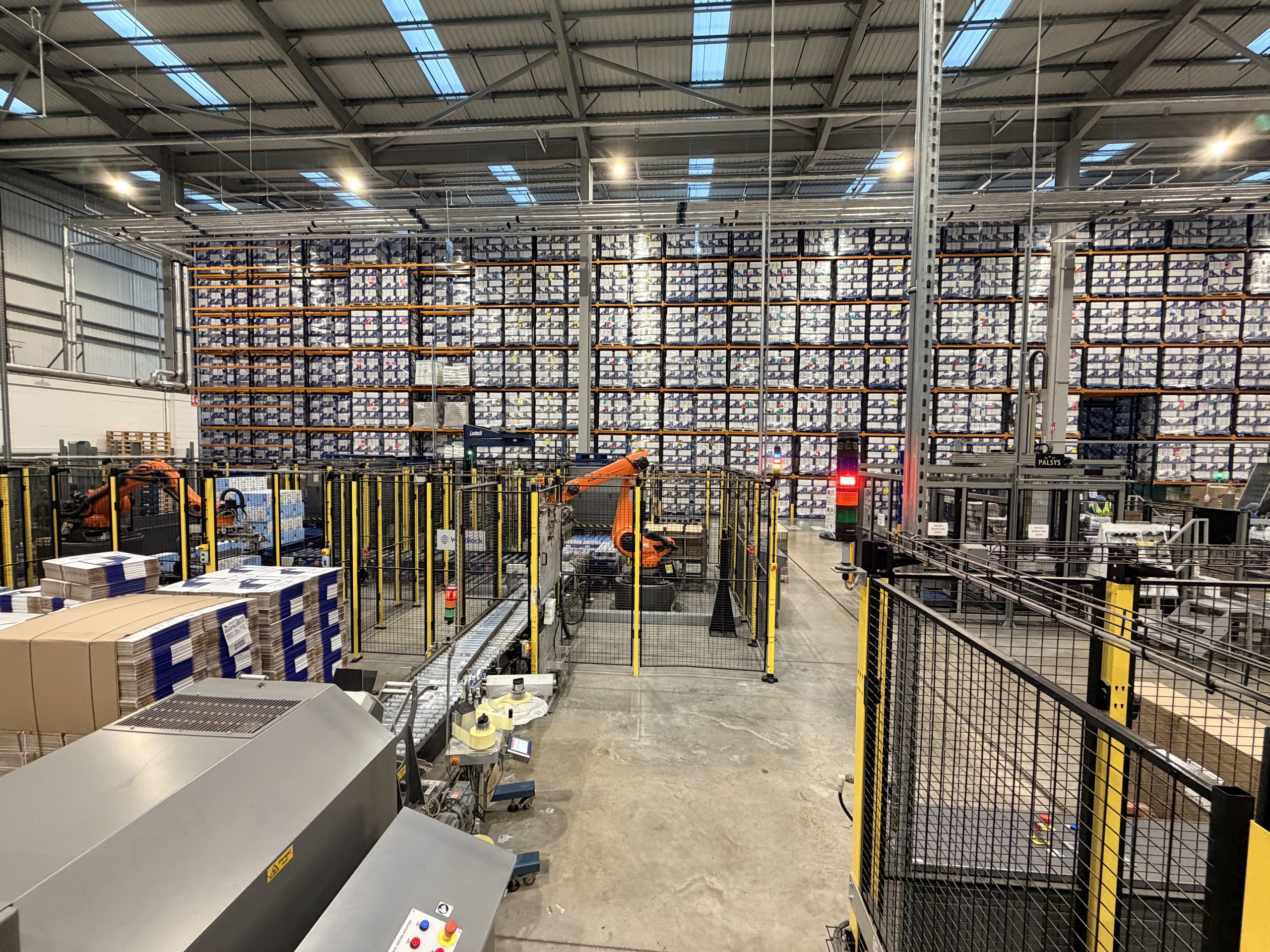
The site has been designed to optimise flow and productivity. Raw materials, blending and filling, and finished goods now follow a logical path through the factory, reducing product movement, downtime and changeover times. “The old layout had evolved into something resembling spaghetti junction,” Mike adds. “Here, we were able to design a clean, efficient flow from the outset.”
Total investment in the relocation was £22m, split roughly equally between land and construction, plus new production equipment to increase capacity across liquid and paste product lines whilst automating previously manual tasks.
Just over half was financed through a £12.5m revolving credit facility from Lloyds. According to Mike, Lloyds showed a clear appetite to support Astonish’s ambition, taking time to understand the plan and structuring a financing package tailored to the company’s needs.
When early operational challenges at the new site led to a temporary dip in output, Lloyds worked closely with Astonish to revise terms and provide breathing space. “They didn’t micromanage. They backed the plan and gave us room to execute it while giving valuable input along the way,” Mike says.
Lee Bloodworth, Relationship Director at Lloyds, added: “Astonish’s journey is a fantastic example of how strategic investment and partnership can drive sustainable growth. Supporting Astonish through its relocation and automation journey has been a privilege for Lloyds. We’re proud to have played a role in enabling their bold ambitions, and we look forward to supporting future success as they scale both in the UK and internationally.”
Efficiency through automation
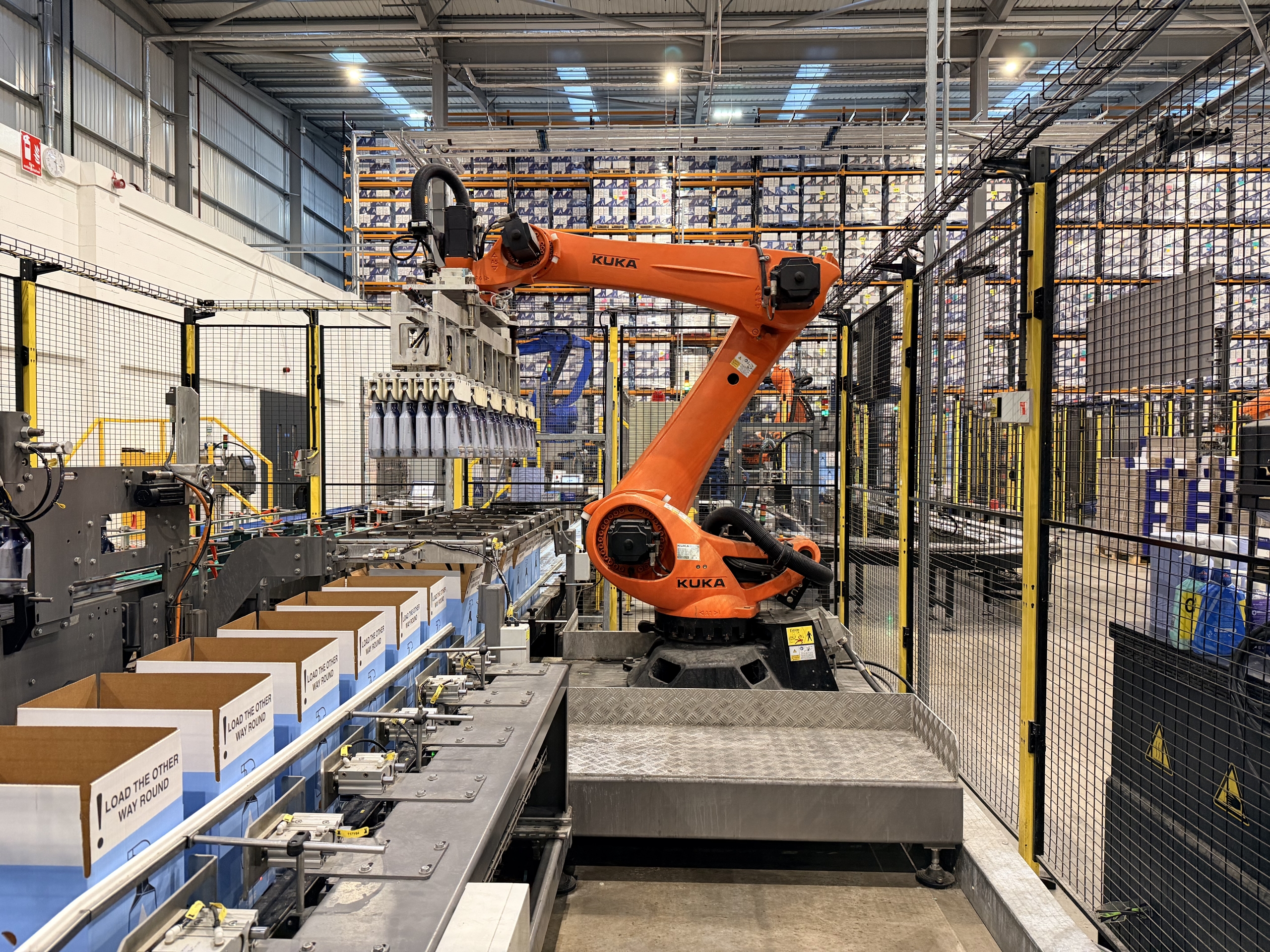
Rather than simply replicating its former operations, Astonish took the opportunity to modernise operations – upgrading core machinery, retiring ageing assets and investing in automation – particularly across its liquid filling and end-of-line processes.
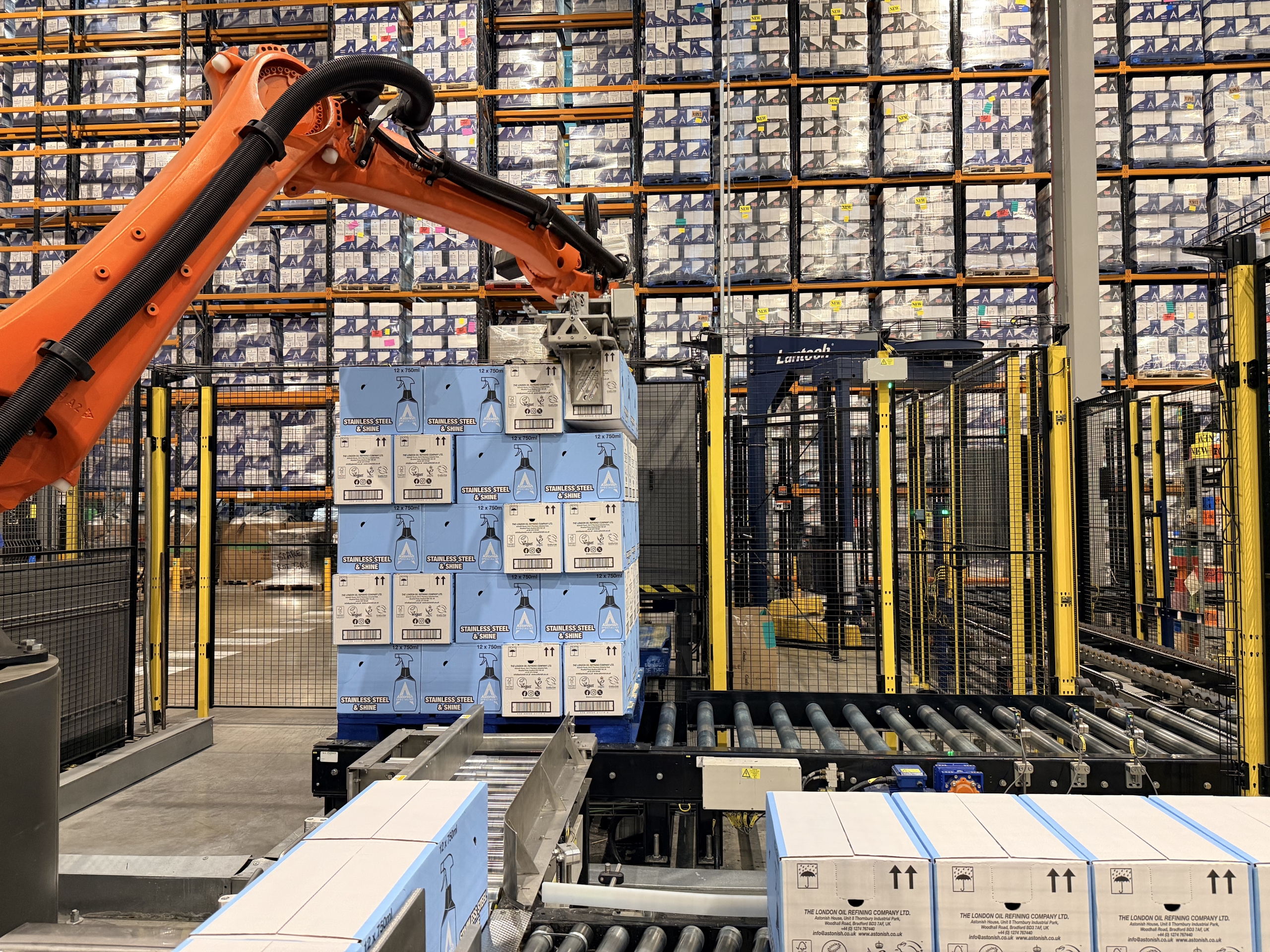
The impact has been transformative, with some areas seeing throughput increase by up to 160% and labour requirements halved. One of the clearest examples is Astonish’s high-volume trigger spray line – its best-selling product format. Previously, it produced 85 bottles a minute and required four operators per shift. Today, with automated feed and palletising systems, the line runs at 220 units per minute with just two operators, an increase of 158%.
Similar efficiency gains have been replicated across the factory, with all eight production lines now incorporating some level of automation. Its newly-developed familiarity with automated systems has allowed Astonish to establish a standardised approach and build a trusted supplier list, enabling future upgrades to be implemented faster and more cost-effectively. “Automation has become an integral part of every new development we make, rather than an afterthought,” says Mike. “That’s a profound shift, and one that will continue to deliver significant operational benefits as we move forward.”
Crucially for the management team, leveraging automation hasn’t come at the expense of jobs. As repetitive manual tasks are phased out, Astonish has made a deliberate decision to redeploy staff and invest in upskilling. “We knew people would have questions,” Mike explains. “Some had done the same job for over a decade. So, we spent time upfront to explain how developing new skills would strengthen their future with the business.”
A structured in-house training programme has been introduced, led by a senior operator promoted into a new role as head of internal training. Workers are certified across multiple production lines, with the goal of every operator eventually gaining experience on all eight. “The aim is to build a highly skilled, adaptable workforce that can move where needed,” Mike explains. “People have embraced the variety. It’s kept things fresh, and challenged them in a positive way.”
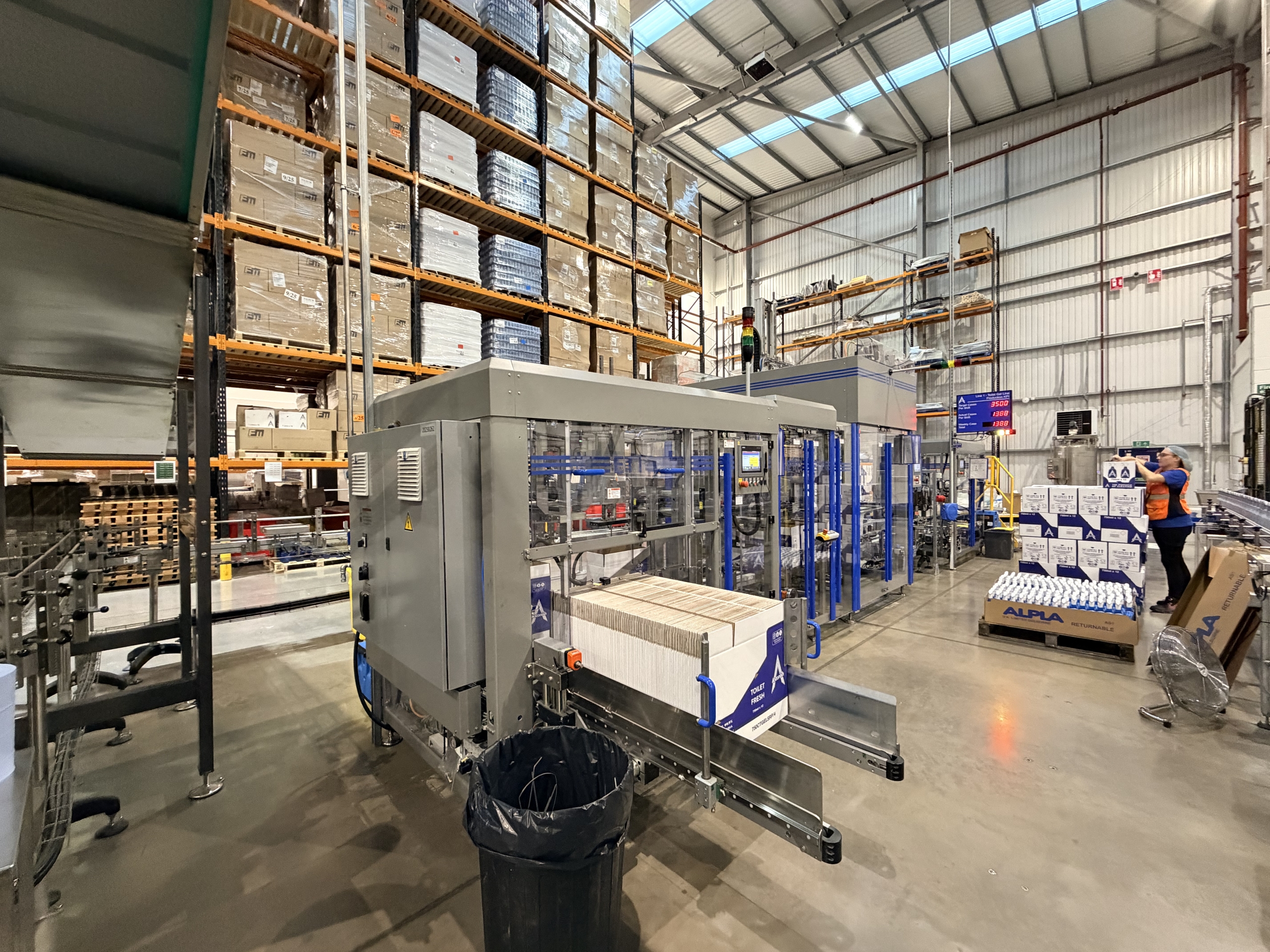
Automation is also enabling greater agility. A new toilet gel line, launched just 12 months ago, opened up a brand-new category for the business. Plans are already underway to modify the line so it can double up as a trigger spray line when additional capacity is required – part of a broader move to ensure flexibility in all areas of production.
The new mindset has already paid dividends. Automation, supported by a smarter factory layout and upgraded machinery, has seen Astonish meet its five-year financial target in less than 24 months. It has also spurred further investment, including two fully automated lines to support new product formats and retail channels.
Creating a digital backbone
Automation may have transformed the shop floor, but Astonish’s next leap will come from digitising the systems that support it. In early 2025, the company began a 12-month project to replace its legacy ERP system with Microsoft Dynamics – a modular platform designed to bring real-time visibility and control across manufacturing, inventory and planning.
“Our old setup worked because we’ve got great people,” Mike says. “But as the business scales, it’s clear we’ve been too reliant on Excel, emails and people’s memory.”
The new platform includes barcode scanning, bin-specific warehouse management and accurate, live inventory – reducing wasted time and stock discrepancies. It will also integrate forecasting, scheduling and procurement into a single, centralised system, cutting the risk of stock-outs and helping the business produce the right products at the right time.
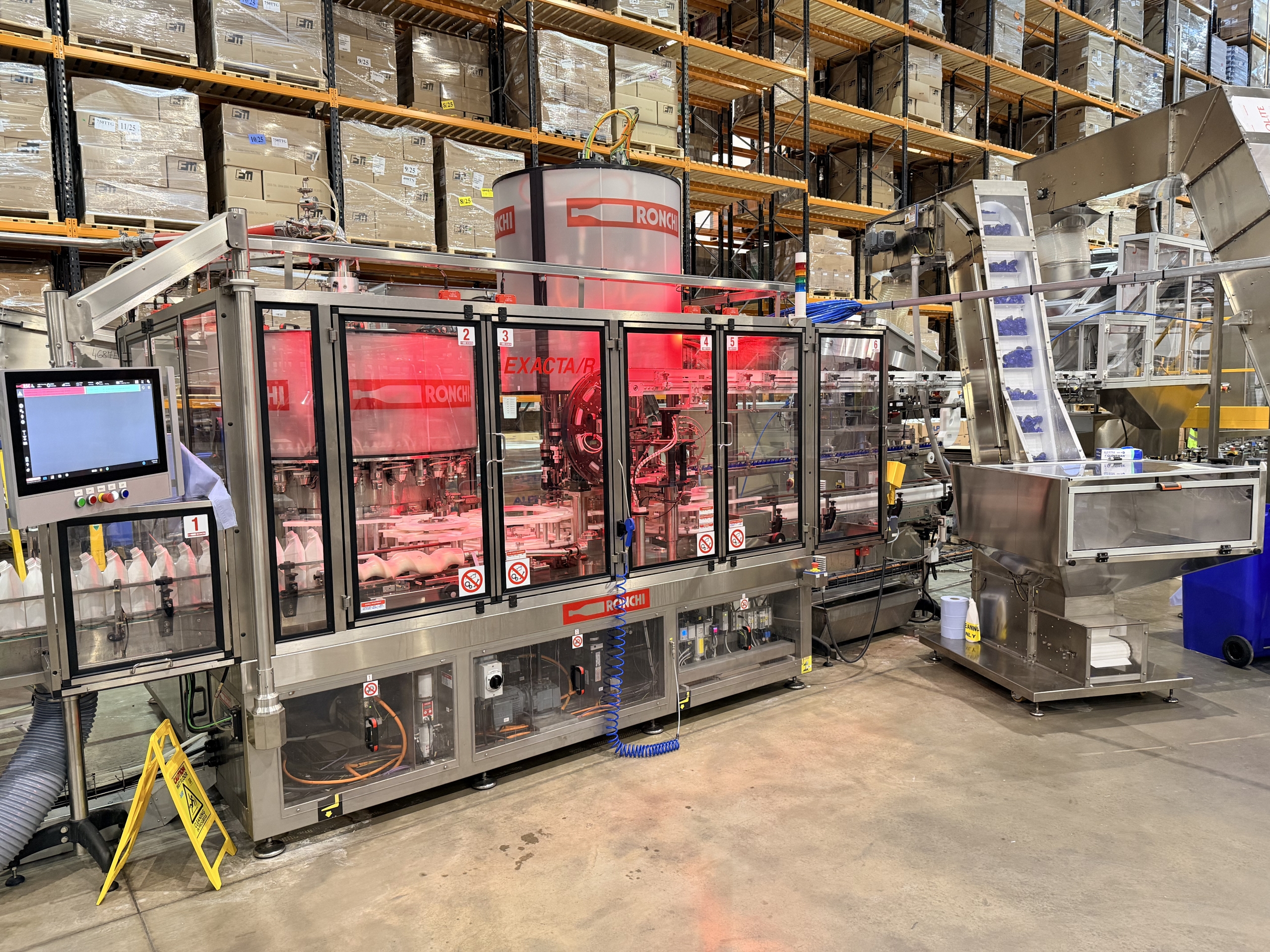
Perhaps most transformative will be the ability to unlock performance insights from Astonish’s automated lines. “Our machinery already has diagnostics built in – we just don’t use them,” Mike adds. “Phase two of the rollout will start pulling that data through so we can monitor downtime trends and spot root causes much faster.”
The digital upgrade is another sizeable investment for Astonish, but it’s expected to deliver long-term scalability by improving transparency and responsiveness both internally and across the supply chain. “It’s going to give us the confidence and visibility we need to not only continue growing but to grow well.” said Mike.
Innovation with impact
Astonish’s approach to sustainability is grounded in how well products perform. That focus on efficacy drives in-house formulation across its portfolio, each one developed and tested in-house at its ultra-modern on-site laboratory.
A key aspect of its ingredient strategy is to prioritise all-natural alternatives where possible. Surfactants – compounds that enable cleaning products to foam and lift dirt – are typically derived from petrochemicals. Astonish uses plant-based versions in much of its range. “We’re always looking to do the right thing, from the raw materials we use to ensure they’re not tested on animals.” Mike says.
Packaging is another focus area. The company is actively working with its supplier, ALPLA, to increase the recycled content in bottles, particularly for high-volume SKUs. The challenge is ensuring durability across high-speed filling lines and during export to hotter climates such as the Middle East – one of Astonish’s fastest-growing markets. “The product has to be protected, and the bottle has to perform – there’s no room for compromise.”
Where risk is lower, sustainable shifts have happened faster. A new paste cleaner packaged in a recyclable tin has already been launched, with further innovations expected in 2026.
Progress is also being made at factory level. Rooftop solar panels supply up to a third of its energy use during summer months, and it recently operated entirely on solar power for the first time. A voltage optimisation system has also been installed, cutting energy consumption by 10% and reducing wear on equipment.
Environmental improvements often align with broader operational gains. On the toilet gel line, Astonish uses a novel electric sleeve-shrinking system rather than traditional steam. The move offers improved energy efficiency and temperature control, resulting in more consistent, even heat distribution and fewer defects from uneven shrinking.
Poised for growth
Astonish may be 60 years old, but in many ways its journey is just beginning. The new layout, assets and ways of working have already delivered results – doubling revenue in three years – but leadership is clear: this is only the start. The focus now is on optimisation – sharpening decision-making, increasing agility and building on what’s been put in place.
Despite recent growth, only around a third of the factory’s capacity is currently in use. Most lines run one or two weekday shifts, with no weekend production – leaving considerable headroom without needing additional building work. Further automation, smarter planning and extended shifts are all levers the business can pull, supported by the digital and operational infrastructure now in place.
Export growth is expected to absorb a share of that capacity. Astonish currently supplies more than 30 international markets, with overseas sales accounting for around 15% of revenue. That figure is set to rise as the company targets increased distribution in the Middle and Far East where demand for antibacterial products continues to grow.
The long-term goal is to hit £120m revenue by 2030 – a bold target, but one that feels within reach given current momentum. With modern machinery, a more agile operating model and a multi-skilled workforce, Astonish is well positioned to capitalise on new opportunities – and do so on its own terms.
“We’ve laid the groundwork,” Mike concludes. “Now it’s about executing well and continuing to invest – in people, products and performance – to take this business even further.”
