

4 minute read • published in partnership with Syspro
Insight: Manufacturing enters 2026 with a renewed focus on resilience and agility
After a turbulent year characterised by supply chain fragility, tech-led innovation, cybersecurity breaches, and, of course, the deep uncertainty caused by trade tariffs, manufacturers are looking to 2026 with a renewed focus on resilience and on how well they can respond to sudden shifts in market conditions. In fact, new research from Make UK highlights that manufacturers left 2025 on firmer ground, with hopes to carry positive growth into the new year. Chris Lloyd from Syspro looks at why the focus now is on resilience and agility.
In this context, several important issues are at play. High on the list is a change in operational assumptions – away from pure efficiency models, such as just-in-time and single sourcing, toward more robust, adaptable processes.
In many businesses, critical steps in the manufacturing process are already being repatriated or regionalised, especially for high-risk or high-value activities. As part of this approach, manufacturers have also identified that vulnerable or complex processes are better located closer to customers, reflecting a shift toward right-shoring.
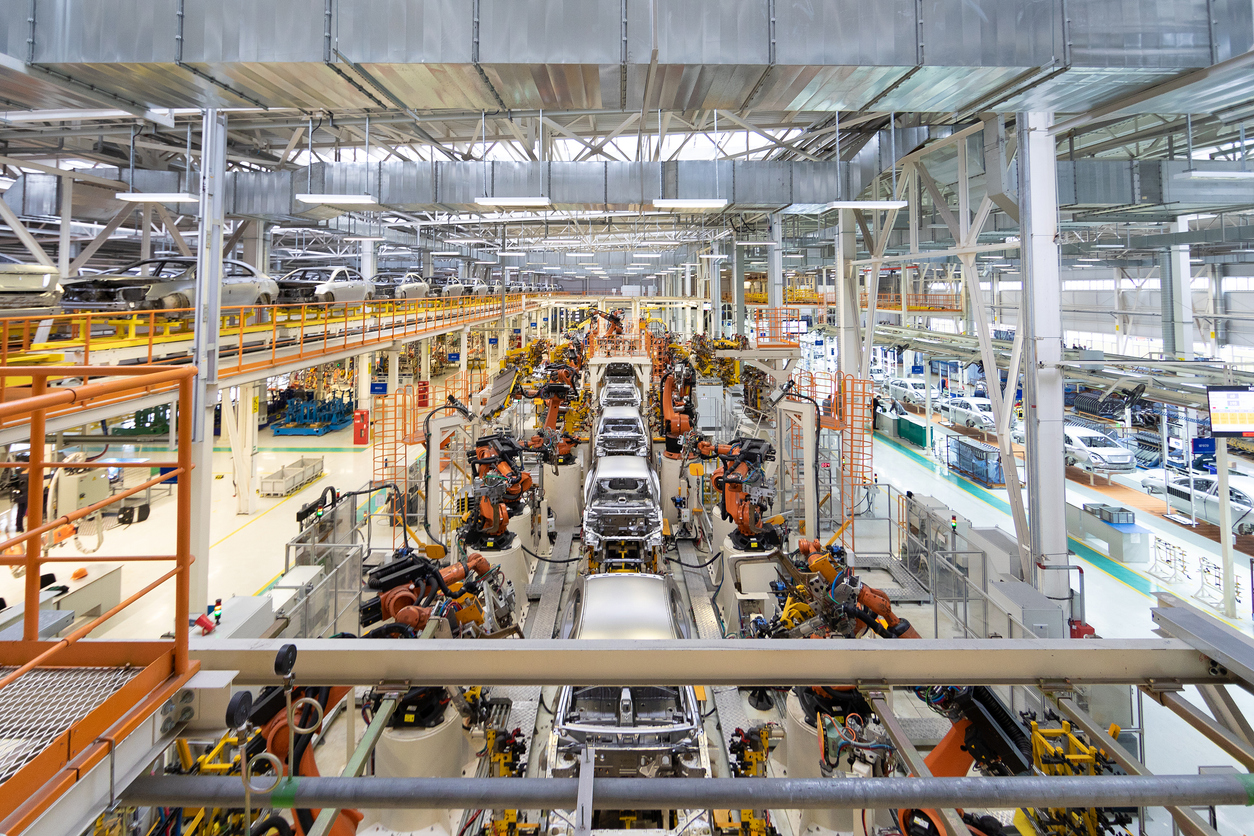
Bring these and other highly nuanced issues together, and the sector is operating against a highly dynamic backdrop which is set to continue into 2026. But, more specifically, what key issues are manufacturing businesses likely to encounter in the next 12 months?
1. Resilience will overtake cost efficiency as the primary manufacturing supply chain strategy
Given their collective experiences over the last 12 months, manufacturers will continue to move away from traditional just-in-time and single-sourcing models alongside the increasing adoption of right-shoring strategies.
To maximise efficiency, they will rely more heavily on digital tools to coordinate global partners and maintain operational continuity. This will deliver deeper visibility into tier-two and tier-three suppliers to anticipate disruption as early as possible.
The businesses that outperform competitors will be those in a position to reroute production quickly and maintain delivery commitments despite shocks.
2. AI will push manufacturing systems toward more autonomous, intent-driven operation
2026 is expected to be the first year manufacturing systems begin operating with a degree of AI-powered autonomy, with systems working within pre-defined guardrails and delivering measurable operational outcomes. At the same time, the long-established, transaction-driven ERP model is giving way to platforms that behave more like active collaborators in production and planning.
In addition, AI agents will help planners and shop-floor teams by highlighting potential operational problems early and making real-time adjustments that guide day-to-day decisions. As such, the technology will be viewed as an operational assistant rather than a bolt-on tool.
Rather than replacing jobs, AI will reduce manual workload and increase the need for human oversight to ensure accuracy and responsible use.
3. Trust in data and AI will become key to competitiveness
However, successful AI adoption is not a given; it will only move as quickly as executives feel confident in the systems and data used to train them. As some manufacturers are certain to discover in 2026, poor or inconsistent data will become a strategic risk because it undermines trust and limits AI’s usefulness.
Forward-thinking businesses across the industry will prioritise data quality initiatives to strengthen confidence in autonomous and AI-assisted systems. Those who successfully build this trust will progress faster and gain more value from emerging levels of AI autonomy.
4. Manufacturers will intensify investment in workforce capability to close the skills gap
Despite their enormous potential, automation and AI systems alone will not solve the talent shortage, and manufacturers are increasingly aware of this.
Ultimately, manufacturers only succeed when supported by a workforce with the skills to use new technology effectively. As a result, 2026 will see the growth of “pragmatic futurism”, where businesses invest in practical training rather than speculative innovation.
This will include deeper investment in user-friendly tools, such as mobile apps and intuitive interfaces, to keep newer workers engaged, while continuous upskilling will become a central element of operational strategy.
5. Manufacturers will demand simpler digital ecosystems and stronger cross-functional collaboration
Operational agility has become central to how well manufacturers perform. But achieving this objective requires closer coordination between operations, IT and the shop floor as manufacturing environments become more digitised.
Businesses can no longer rely on spreadsheets to manage disruption or redeploy production quickly; true agility depends on access to real-time information. As a result, manufacturers will expect technology partners to simplify, not complicate, their digital landscape so leaders can focus on decisions that matter.
Elsewhere, planners and operators will be more deeply empowered, and so they can play a bigger role in responding to disruption, supported by systems that give them timely, actionable insight. Success will depend on a willingness to focus on long-term strategy rather than tactical projects.
The next 12 months could be another bumpy ride for a sector that has seen more than its fair share of recent ups and downs. If the old adage about adversity leading to strength is to be believed, however, many manufacturers are now in a position to use the pressures of the past year to cope with whatever comes next.
