
4 minute read - 26 Mar, 2026
Opinion: Why sovereign manufacturing is becoming critical to UK infrastructure security
The resilience of the UK’s critical national infrastructure is under increasing scrutiny, as recent events and government policy signal a shift in how risk is understood—and managed.
In November 2025, the government announced plans for a new Energy Resilience Strategy following the North Hyde substation fire, which caused major disruption and exposed vulnerabilities in essential infrastructure. The strategy is expected to strengthen requirements around asset maintenance, inspection and design standards, alongside improving coordination across operators and emergency services.
At the same time, the threat landscape continues to expand. Cyber attacks are now considered one of the UK’s top national security risks, with hundreds of serious incidents affecting essential services each year. New legislation is being introduced to strengthen resilience across sectors including energy, transport, healthcare and digital infrastructure.
Together, these developments reflect a growing recognition that infrastructure resilience depends not only on high-level systems and policy—but on the reliability of the components that underpin them. For manufacturers operating in security-critical environments, this shift is significant.
Brett Barratt, Managing Director of Warrior Doors, a Birmingham-based manufacturer of high-security sliding doors, argues that increasing regulatory focus is exposing a long-standing gap between specification and real-world performance. “There’s a growing assumption that if a product meets a standard on paper, it will perform the same way in service,” he says. “But in critical infrastructure, that’s not always the case. Variability in manufacturing, materials or installation can introduce risk—and that’s where failures happen.”
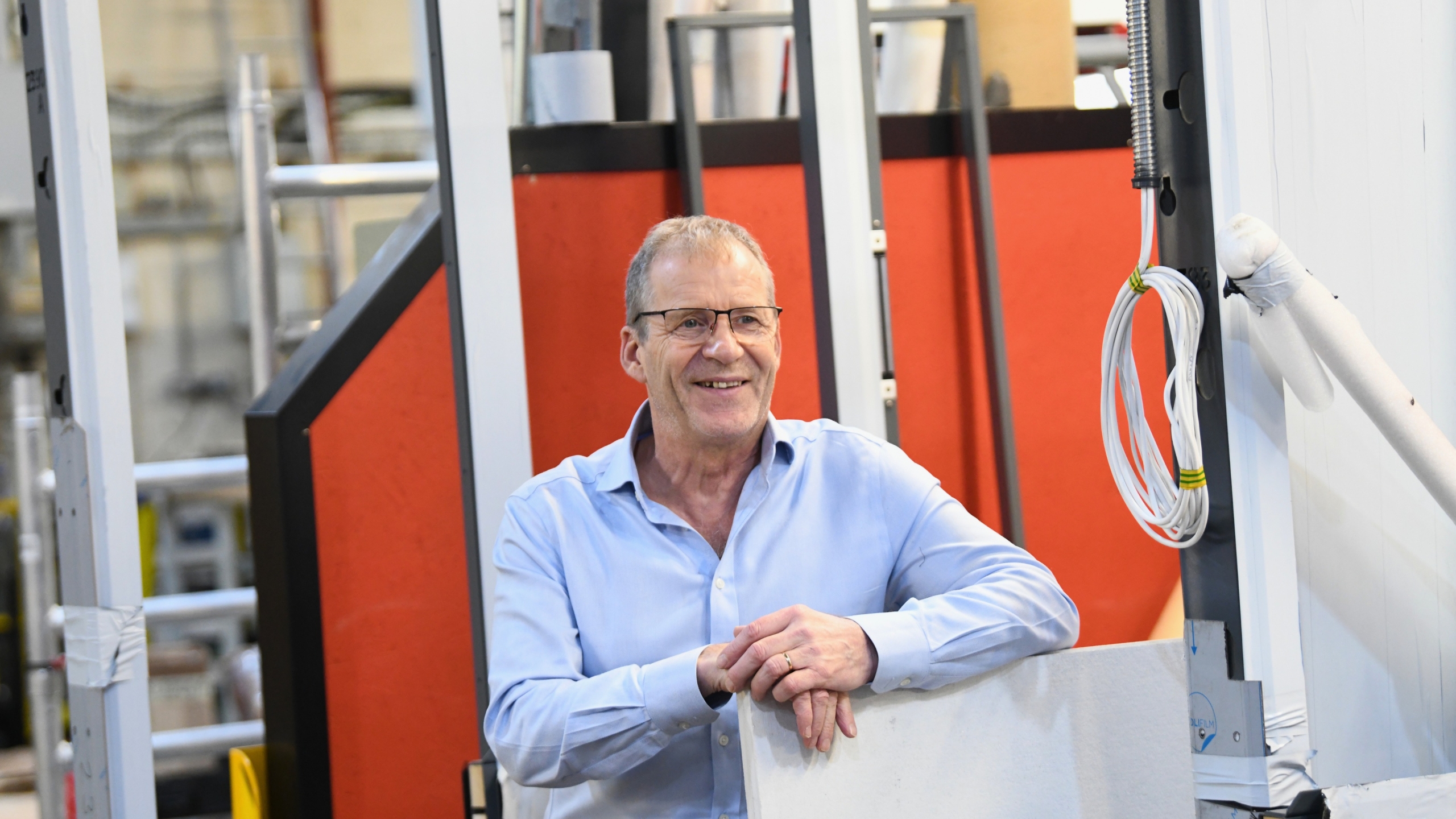
Brett Barratt, managing director of Warrior Doors, a manufacturer of stainless steel security sliding doors / Picture: Warrior Doors
According to Barratt, the issue is not simply about compliance, but about consistency and accountability across the full lifecycle of a product. “When you’re protecting infrastructure, oversight matters at every stage,” he explains. “If design, fabrication, testing and installation are fragmented across multiple suppliers or geographies, it becomes much harder to guarantee that what was tested is what actually ends up on site.”
This is where the role of sovereign manufacturing is gaining renewed attention. For Warrior Doors, all products are designed, manufactured and assembled in-house at its Birmingham facility, with installation and maintenance also handled by its own engineers. While this model reflects the company’s operational approach, Barratt suggests it also aligns with a broader shift in market expectations.
“We’re seeing clients place much more emphasis on traceability and control,” he says. “They want to know where materials come from, how products are built, and that there’s a clear line of accountability if something goes wrong. That’s much easier to achieve when manufacturing is kept within the UK.”
The importance of this oversight is reinforced by third-party certification. Security products used in high-risk environments are increasingly required to meet independently verified standards, with testing designed to simulate sustained, real-world attack scenarios. “Certification is critical, but it’s only part of the picture,” Barratt adds. “The real question is whether the product being installed consistently matches the one that was tested. That’s where manufacturing control and installation quality become just as important as the test itself.”
This focus is becoming particularly relevant in environments where high footfall intersects with elevated threat levels—such as transport hubs, public buildings, data centres and defence-related sites. In these settings, even minor weaknesses in physical security can have disproportionate consequences.
The government’s increasing emphasis on maintenance regimes, inspection standards and cross-sector resilience reflects a wider move toward verifiable, repeatable performance. Infrastructure is expected to last for decades, but as assets age and threats evolve, the tolerance for uncertainty is diminishing.
There are, however, trade-offs. Global supply chains can offer cost advantages and scalability, while domestic manufacturing often requires greater upfront investment. But as Barratt points out, the calculation is changing. “When the cost of failure is disruption to essential services or risk to public safety, the cheapest option isn’t always the best one,” he says. “Resilience comes from knowing that every part of the process—from raw material to final installation—has been controlled and verified.”
As the UK moves toward implementing its Energy Resilience Strategy and strengthening cyber and physical security frameworks, the conversation around infrastructure protection is becoming more granular. For manufacturers of security-critical components, this means greater scrutiny—but also a clearer role.
“Sovereign manufacturing isn’t just a political idea,” Barratt says. “In our sector, it’s a practical way of reducing risk. It gives clients confidence that the products protecting their infrastructure have been built, tested and delivered with full accountability.” In an environment where resilience is increasingly defined by the ability to prevent, withstand and recover from disruption, that level of control is becoming less of a differentiator—and more of an expectation.
