

5 minute read • published in partnership with Lloyds
A clear vision – How Derw Glass is using automation and AI to drive growth without losing the human touch
New machines and technology have seen family-owned Derw Glass unlock capacity, reduce waste and improve decision-making. The upgrades support a growth plan that includes expanding into more complex, bespoke work alongside its established double-glazing business.
Derw Glass may be a 35-year-old business, but its modern glass processing facility reflects a company looking firmly to the future.
Founded in Pembrokeshire in 1991 by Julian Palmer as a one-man operation, the business has grown under the leadership of his wife, Noela, and their daughter, Angharad. A £5m modernisation programme over the past three years has created a highly automated operation where AI helps coordinate material requirements, production schedules and delivery routes.
With the final new machine not yet installed, investments to date have already delivered higher output from an existing footprint, improved quality control, less manual handling, reduced waste and better production planning – enabling Derw Glass to meet existing demand while also creating capacity to take on more complex work.
Replacing bottlenecks with capacity
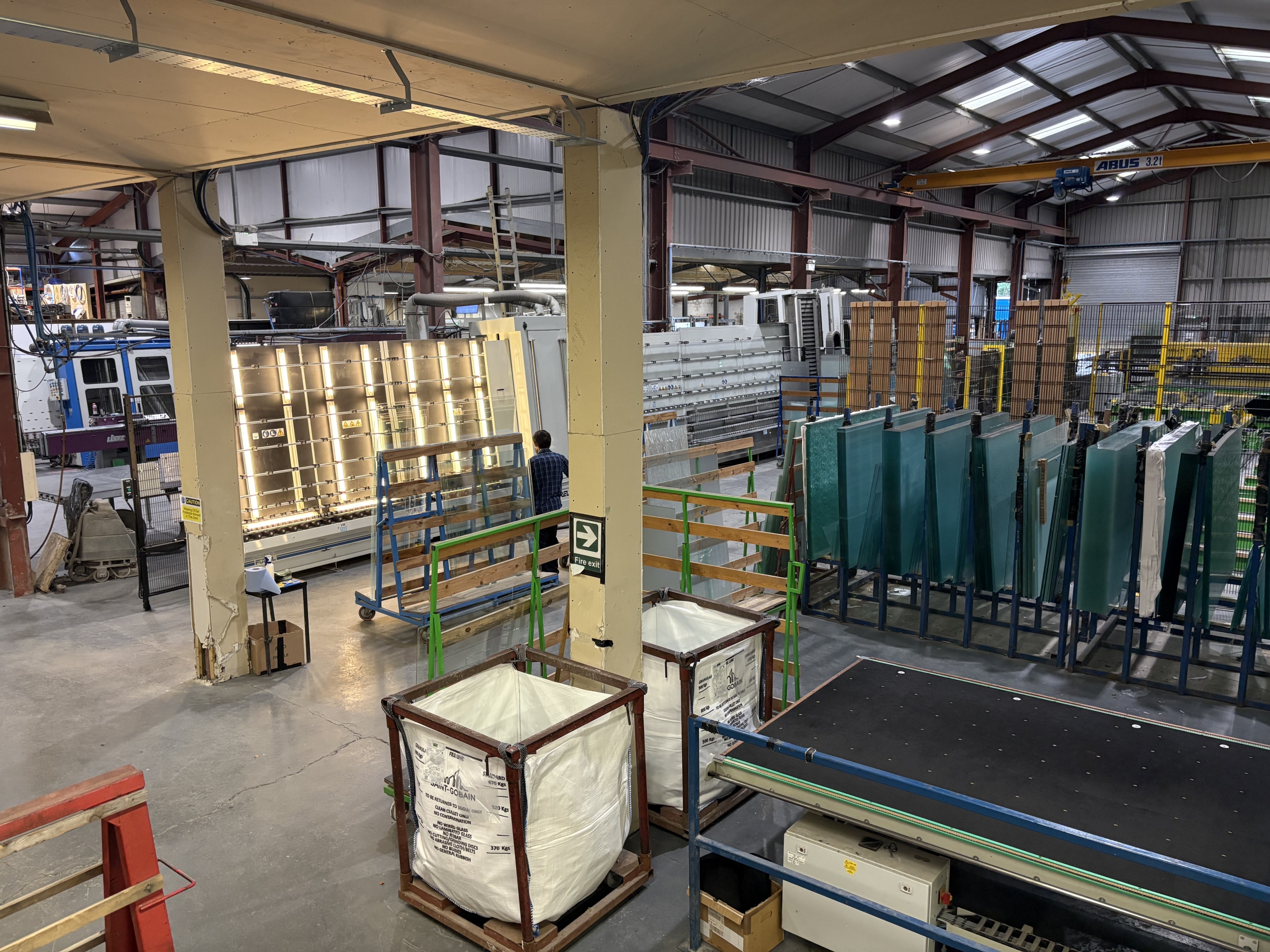
Ageing machinery was limiting what the factory could produce and how efficiently it could do so. With sustained demand for its core products, including double-glazed units, splashbacks and decorative glass, and rising interest in bespoke products, Derw Glass needed to address its production constraints.
A major investment was a new glass cutting table, supported by a £680,000 Asset Finance deal from Lloyds. The new machine uses a laser to apply quality marks and improve cutting accuracy, reducing errors and wasted material. The faster cutting cycle compared with the previous model has increased production capacity by more than 30%, enabling the business to hold substantially more stock.
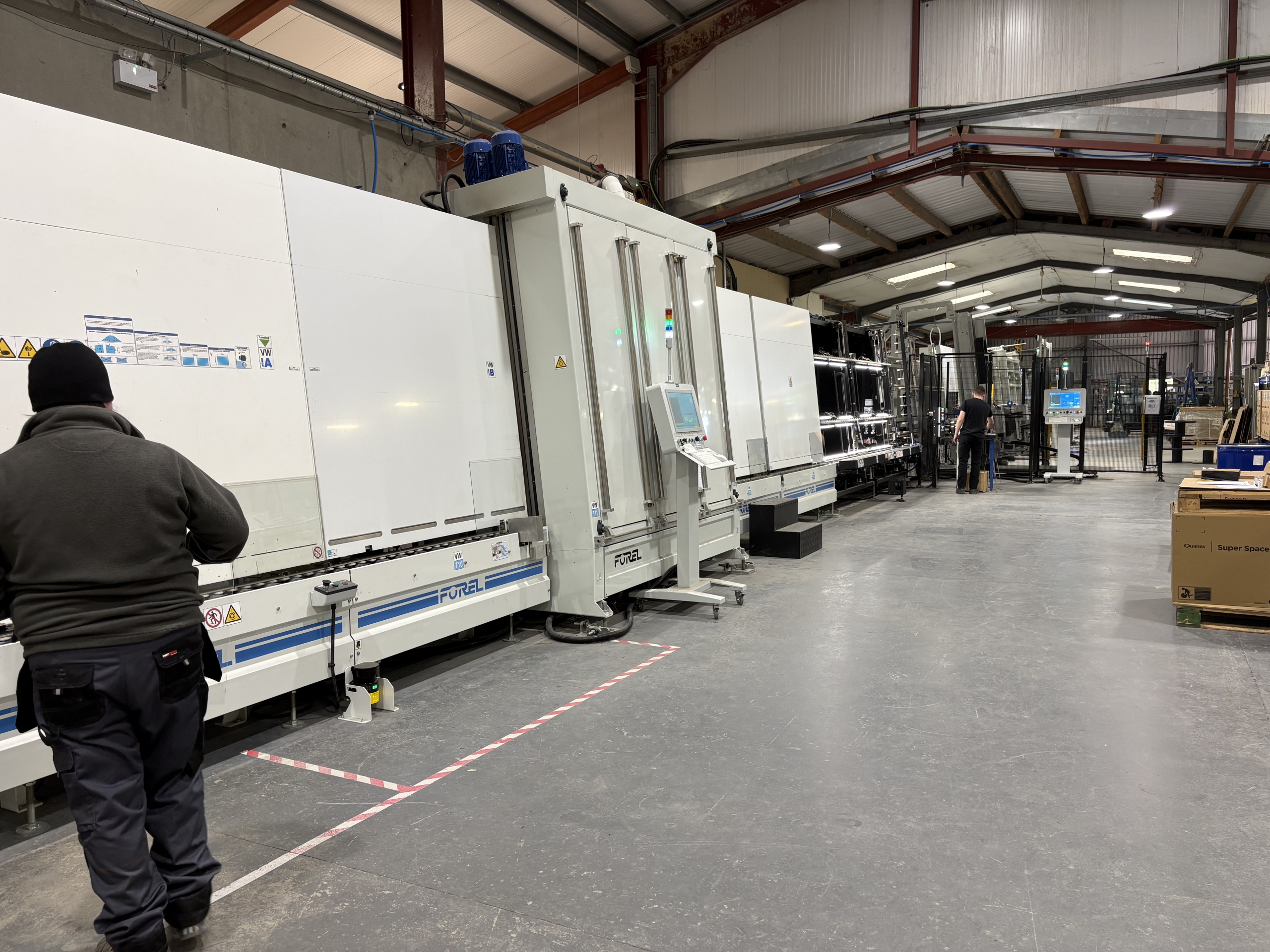
A new spacer machine, part of an automated insulated glass line, is helping improve the production of double-glazed units. The machine, also supported with finance from Lloyds, uses a flexible non-metal spacer that improves a window’s thermal and acoustic performance. It replaces a process that previously involved having to cut and assemble rigid aluminium bars by hand and adding desiccant separately. The simplified process delivers greater unit consistency and involves less waste and manual handling. Where once up to eight workers were needed, the system now requires just three, with former operators upskilled and redeployed elsewhere in the business.
Derw Glass has also invested in a new tempering furnace for glass production that uses integrated data monitoring to optimise the process. Energy efficiency was a key consideration in the investment, and since installing the new furnace, Derw Glass has seen its power costs drop by 30%, saving around £4,000 a month.
Noela says Lloyds has been supportive throughout the investment programme, including when unexpected problems arose. On one occasion, a machine couldn’t be imported from Italy because the finance company wouldn’t release the funds while it was overseas. Lloyds provided a substantial unsecured overdraft for a week, allowing Derw Glass to bring the equipment into the UK.
“The team at Lloyds has always been helpful and available whenever we’ve needed them. I don’t think any other bank would have done that.”
Josh Williams, relationship manager at Lloyds, added: “It’s been fantastic to see the ambition the team at Derw Glass continues to show. The company is a great example of a family business investing for the long term, embracing new technology while staying true to the people and relationships that built its success. At Lloyds, we’re proud to support Noela, Angharad and the wider team as they continue to invest, grow and create new opportunities for the future.”
Making room for higher-value work
Double-glazed units remain central to Derw Glass’s business, with the factory producing around 1,000 units a day. A key driver for the investments was creating room to take on more specialist work, including glass balustrades and staircases.
This work often involves shaping, drilling and polishing, all of which previously required separate machines and significant processing time. A new CNC machine, due to arrive imminently, will change that by combining the three operations in one system.
Noela expects a job that currently takes an eight-hour shift to complete to take around 90 minutes on the new machine. That should make more intricate work viable without putting pressure on the rest of the factory.
The family sees huge potential in the high number of holiday and caravan parks across Pembrokeshire and the wider region, where glass balustrading is becoming more common. “It’s a huge growth opportunity right on our doorstep, but we’ve been cautious about pursuing it in the past because of the time and capacity it would require,” Angharad says.
The CNC machine is intended to remove that constraint and enable Derw Glass to increase output while making better use of its factory and workforce.
Using AI to plan ahead
New machinery is only part of the modernisation, however. Derw Glass is also using AI and digital tools to improve production reporting and planning – important for a manufacturer operating from rural Pembrokeshire and supplying customers across the UK.
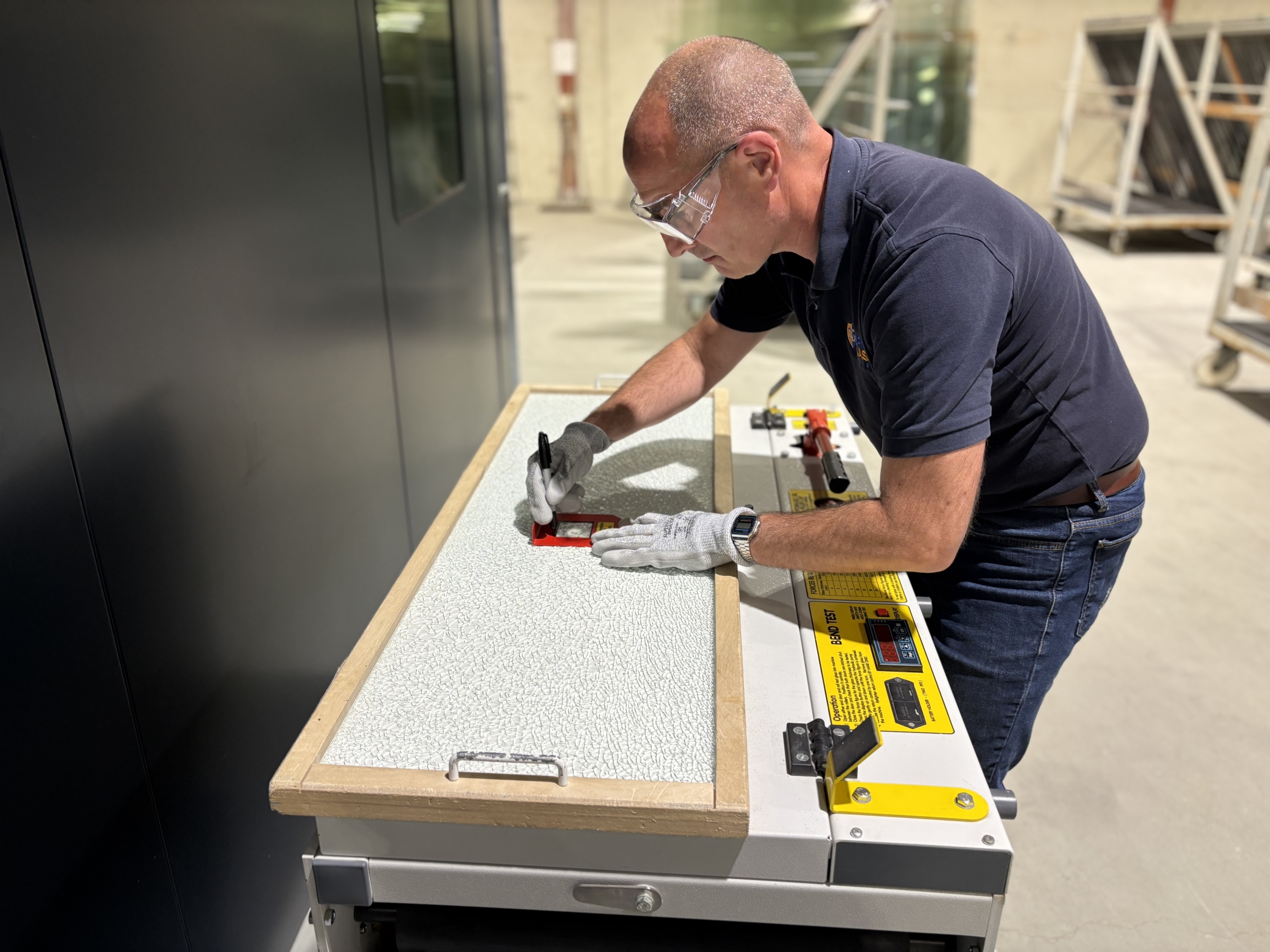
The business has developed its own AI-supported processes to improve visibility of material requirements, upcoming orders, production needs and potential waste, helping it plan ahead and work more efficiently. Additionally, electronic data interchange (EDI) means customer orders feed directly into production software, removing the need for someone to enter the information manually.
The technology is now being used to plan delivery routes and vehicle loading. With its own fleet transporting finished goods, the transport team is using AI to make better decisions about how to group deliveries economically and make better use of vehicle space, particularly as fuel costs rise.
Further projects are under development, including AI-assisted invoicing and admin automation. But Noela and Angharad are clear that the technology is not intended to replace people. Instead, it is changing the skills Derw Glass needs and the work staff do.
Noela says recruitment increasingly involves looking for computer skills, engineering knowledge and an understanding of electronics and programming, alongside practical production experience.
Recruitment remains a challenge in a region with few local routes into glass manufacturing. Derw Glass currently employs four young people – about 10% of workers – and continues to partner with schools to offer work experience. The placements give students a chance to discover an industry they may not have considered.
Keeping the human touch
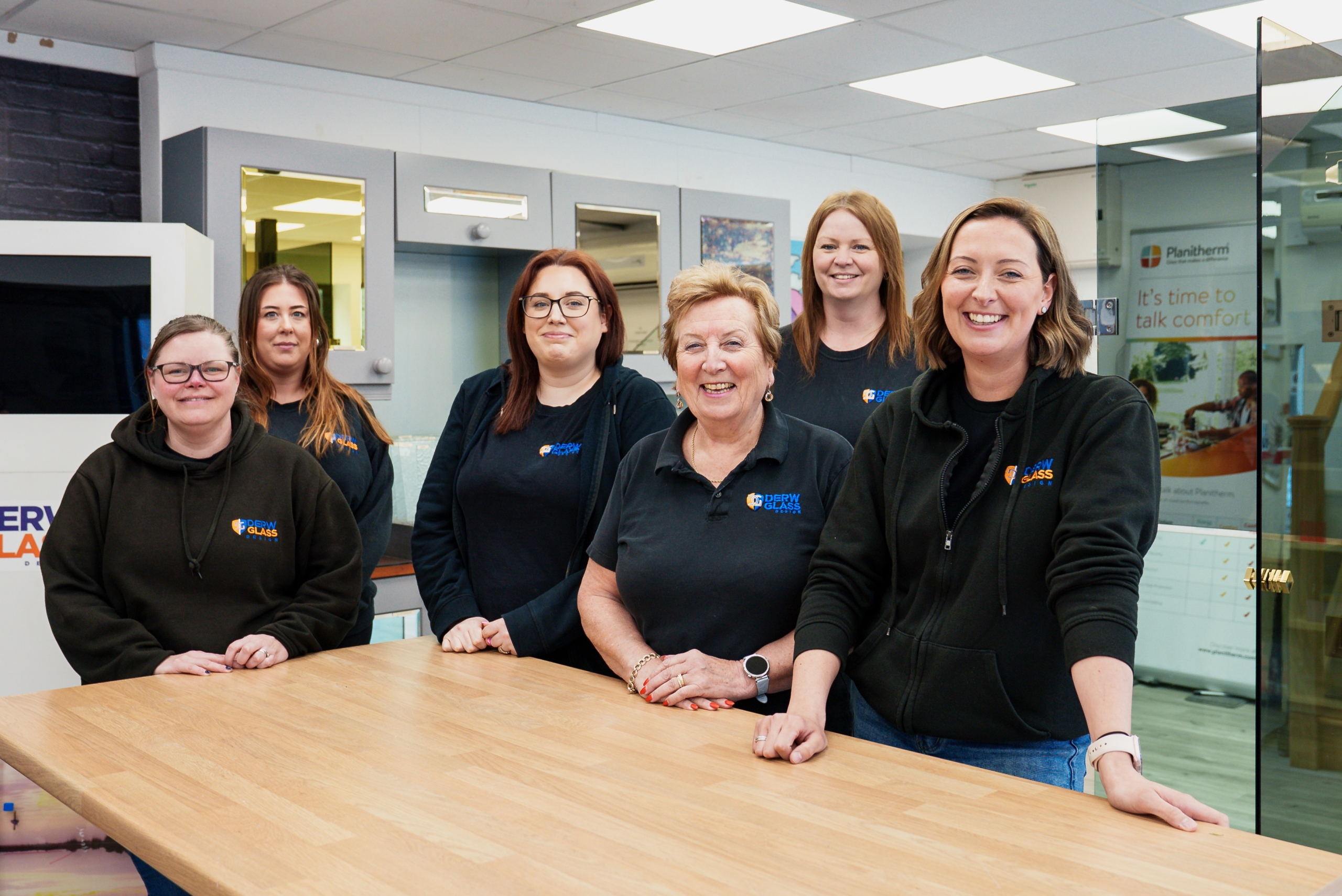
Despite investing in automation and AI, the family doesn’t want technology to undermine the personal service on which it has built long-standing customer relationships.
“People like to deal with a family business because they’re not treated as a number,” says Angharad. “Calls into our office are handled by a person who actually cares. Sometimes the caller isn’t placing an order; they want information or technical support, which we always strive to provide.”
“Julian and our sales team regularly visit customers in person because we like to get to know the people behind the orders, and it helps maintain relationships beyond single orders,” Noela adds.
That human touch is something the family is determined to protect as the business grows. For Noela and Angharad, modernisation is about giving the business more room to grow without losing the qualities that have kept customers coming back.
With its factory transformed and further opportunities within reach, Derw Glass has a clear vision for the future: to build on its established business, take on more specialist work and secure the family legacy for generations to come.
