
5 min read • published in partnership with NCMT
Can UK manufacturing keep pace with aerospace demand?
The global aerospace sector is experiencing exceptional levels of demand, creating significant opportunities for UK manufacturers capable of supporting increasingly ambitious production requirements.
Figures released around this year’s Farnborough International Airshow underline the scale of that opportunity. During the first four days of the show, £62.9 billion of commercial aircraft deals were announced, comprising 353 firm aircraft orders and 904 firm engine orders. ADS Group estimates that these orders could deliver more than £10.8 billion in value to the UK economy.
The figures form part of a much wider trend. Across the first five months of 2026, 1,139 aircraft orders were placed, 35 per cent more than during the same period a year earlier and the highest January-to-May figure recorded.
The global aircraft backlog now stands at an all-time high of 16,909 aircraft. At current production rates, this represents approximately 12 years of work for the UK aerospace sector if UK manufacturers were to support the entirety of that demand.
This opportunity is landing within an already substantial UK industrial base. Aerospace generated £41.5 billion in turnover and £30.6 billion in exports during 2025, while supporting 113,000 UK jobs. Adjacent sectors provide further opportunities, with ADS Group figures showing UK defence turnover reaching £36.5 billion in 2025, while the UK space sector generated £18.6 billion in turnover during 2022/23.
Demand alone does not guarantee opportunity
A strong orderbook is positive news for the industry but turning that demand into work for individual manufacturers presents a different challenge.
Aircraft and engine manufacturers need suppliers that can demonstrate the production capability, quality, repeatability and process control required for complex, high-value components. For companies looking to enter the aerospace supply chain, or expand the work they already undertake within it, simply adding machining capacity may not be enough.
Turbine blades, vanes and other engine components present particularly demanding manufacturing requirements. Heat-resistant materials, complex geometries, small cooling features and stringent quality expectations place considerable demands on machining processes and production equipment.
Manufacturers therefore need to consider not only whether they have sufficient capacity, but whether their processes can deliver the consistency, productivity and technical performance required by aerospace customers.
As Jonathan Smart, managing director of NCMT, explains: “The order and backlog figures show an unprecedented opportunity for capable UK manufacturers, but accessing it requires more than additional machine hours. Manufacturing and engineering firms need stable, repeatable processes, the right production technology and application support that will give their customers confidence to place orders.”
How can the UK supply chain respond?
For existing aerospace suppliers, the current market creates an opportunity to increase production capability and improve productivity. For precision engineering companies considering diversification into aerospace, it presents the possibility of accessing new, high-value manufacturing programmes. In both cases, investment decisions need to be based around the application rather than simply the machine tool.
Processes including grinding, EDM drilling and advanced machining all have a role to play in the manufacture of turbine and engine components. Understanding how these technologies can be combined, optimised and applied to specific parts is becoming increasingly important as manufacturers look for ways to reduce cycle times while maintaining process stability and component quality.
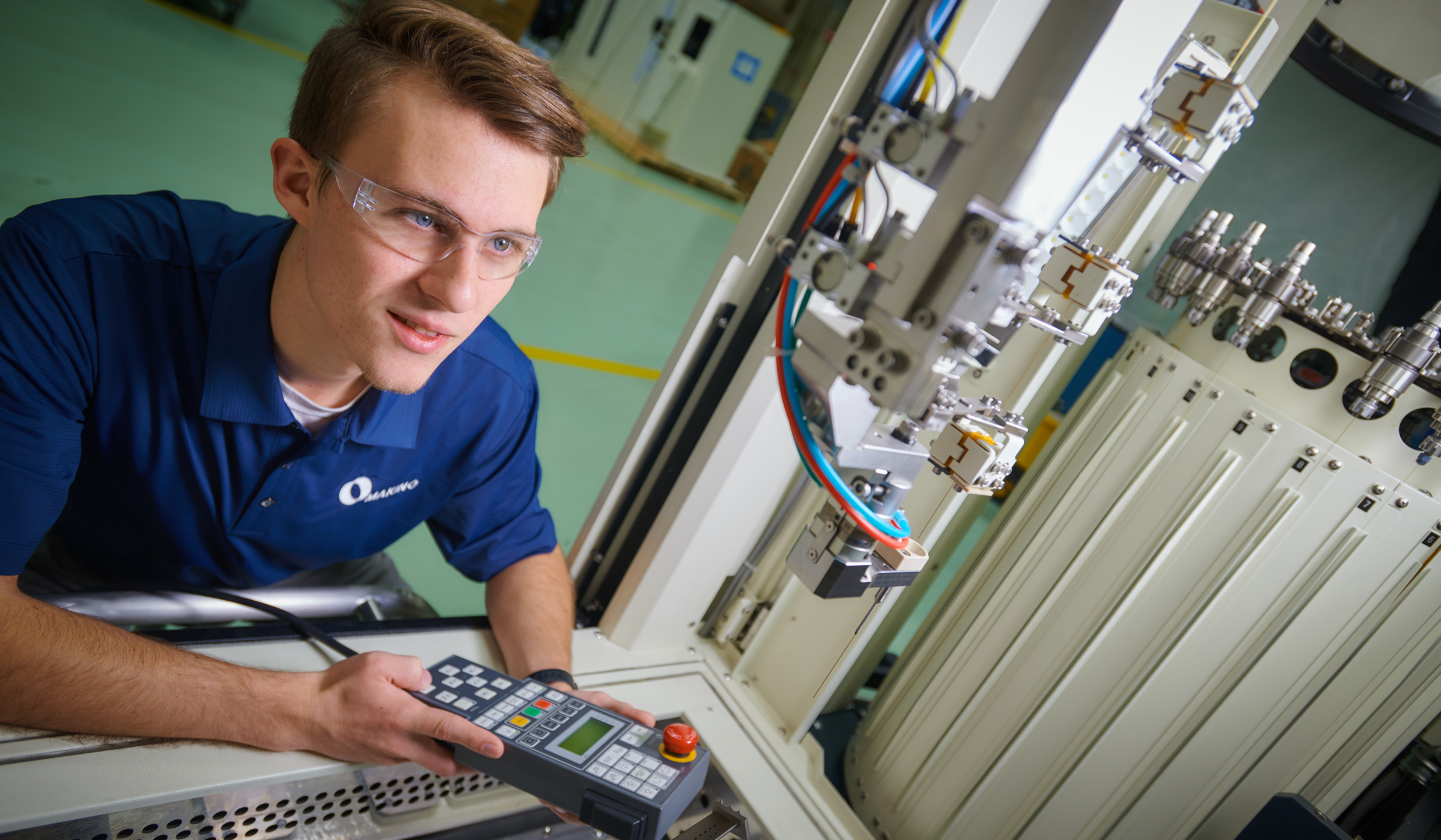
New manufacturing technologies are also being developed specifically around these requirements. The Makino G5, for example, has been developed for the machining of turbine components, combining grinding capability with the precision required for demanding aerospace applications.
The Makino BX3 provides another example, offering a purpose-built EDM solution for the high-volume drilling of cooling-film holes in aero-engine blades and vanes. The machine has been designed to reduce cycle times and improve productivity through rapid positioning, adaptive control and stable submerged machining.
Technologies such as these demonstrate how machine tool development is responding to the changing requirements of the aerospace supply chain.
However, selecting the appropriate technology is only part of the equation. Manufacturers also need to understand how a process will perform on their particular application, how it can be integrated into production and what support will be required as production volumes increase.
Exploring the technology in practice
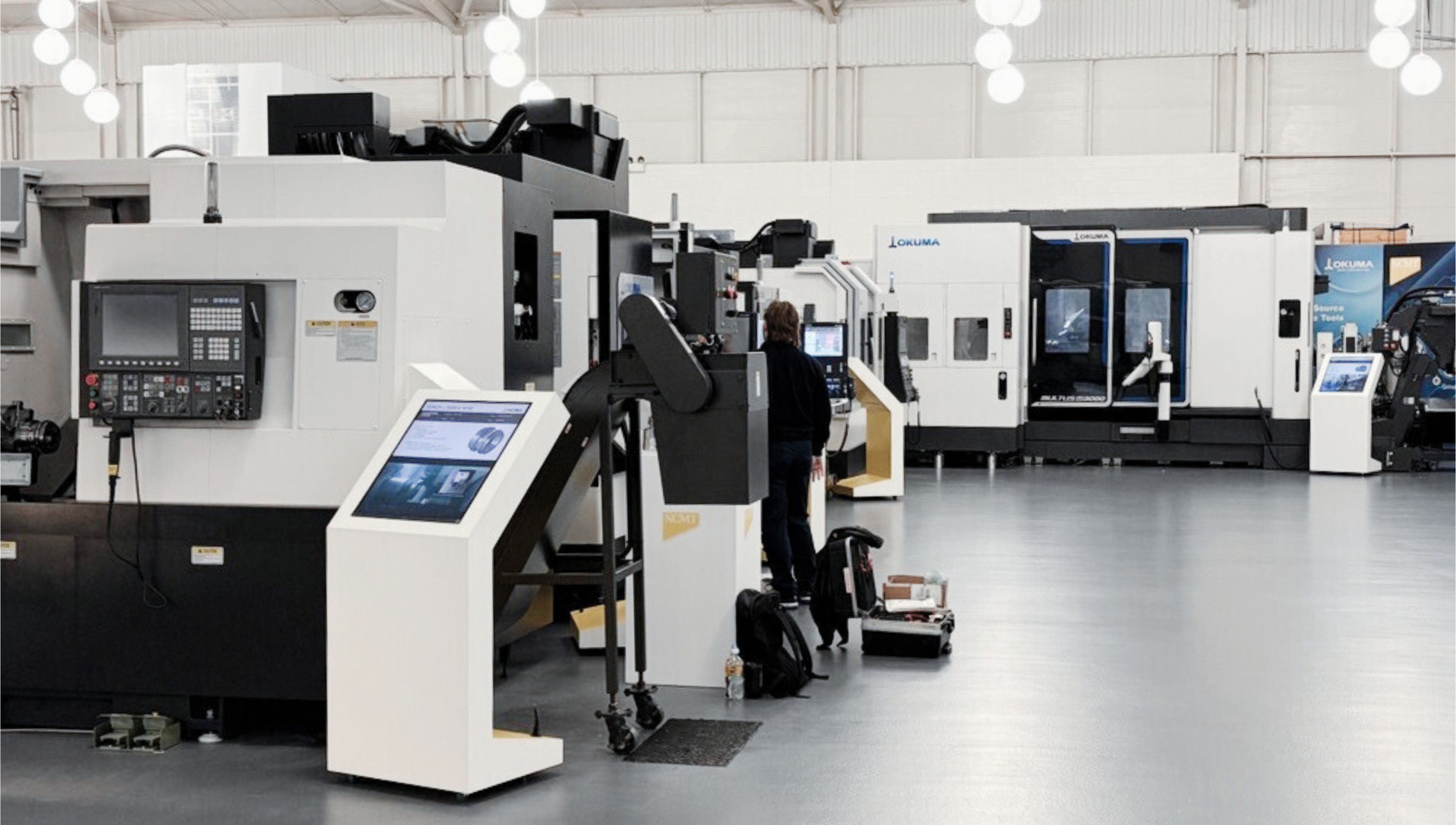
These are some of the questions NCMT will explore during its Engineered for Power technical event at the Coventry Technology Centre on 9 and 10 September 2026.
Rather than focusing solely on individual machines, the two-day event will examine the manufacturing processes required for turbine blades, vanes and other high-value engine components.
Live demonstrations and technical discussions will cover precision grinding, EDM drilling and advanced machining, giving aerospace manufacturers, tier-one and tier-two suppliers, precision engineering subcontractors and production teams the opportunity to examine different technologies and discuss their own manufacturing requirements directly with NCMT engineers.
Makino and Okuma manufacturing technologies will be demonstrated throughout the event, including the Makino G5 and BX3, alongside other machining solutions relevant to advanced aerospace production.
Jonathan Smart added: “Engineered for Power will give manufacturers the opportunity to look at these challenges from a practical manufacturing perspective. Our specialists can discuss real applications, identify the processes and equipment that may be required and explain how NCMT can support manufacturers from initial process development through to sustained production performance.”
For UK manufacturers, the aerospace backlog represents a considerable long-term opportunity. The challenge now is ensuring that the supply chain has the technology, processes and production capability required to turn that demand into sustainable manufacturing growth.
Engineered for Power takes place at the NCMT Coventry Technology Centre on 9-10 September 2026. Registration is now open here.
