
6 min read • published in partnership with Atlas Copco
Compressed air condensate: the compliance risk hiding in plain sight
Much of the attention given to compressed air systems rightly centres on energy efficiency, reliability and air quality. Less visible, but equally important, is the management of condensate produced during the compression process. In oil-injected compressed air systems, condensate can contain traces of compressor lubricant, dust and other airborne contaminants. This creates waste that requires appropriate treatment before disposal, both to minimise environmental impact and to comply with local wastewater requirements.
Condensate production is unavoidable. Moisture in the intake air turns into liquid as the air is compressed and cooled, collecting in aftercoolers, air receivers, filters and dryers. The challenge for operators is therefore to ensure it is collected, treated and discharged in a controlled and compliant way.
An unavoidable waste stream
The quantity of condensate produced by a compressed air system can be substantial, particularly in warm or humid environments. Under moderate ambient conditions, a compressor with a free air delivery of 30 m³/min may produce approximately 17 litres of condensate an hour at the aftercooler. By comparison, a system rated at 160 m³/min may produce around 90 litres an hour.
Actual volumes will vary according to operating conditions, including ambient temperature, relative humidity, working pressure, operating hours and the design of the compressed air treatment system. Nevertheless, these figures demonstrate why condensate management must form part of the design and operation of any oil-injected compressed air installation. Simply collecting the liquid is not enough. Operators also need to understand what it contains, where it is being discharged and what treatment is required before that discharge can take place.
Why untreated condensate creates a compliance risk
In the UK, wastewater discharge requirements can vary according to the site and the route by which the condensate is discharged. The permitted concentration of residual oil may also vary according to conditions imposed by the local water or environmental authority.
What remains consistent is that oil-contaminated water should not be discharged on the assumption that it is harmless. In many regions, direct disposal of untreated compressor condensate into a public sewer is not permitted. Oil can spread across the surface of water and interfere with the transfer of oxygen to organisms beneath it. It can also affect wildlife and contribute to the contamination of waterways and wastewater systems.
Failure to manage condensate correctly may therefore expose an industrial site to enforcement action or financial penalties. Even where no immediate incident occurs, a business that cannot demonstrate how its condensate is collected, treated and monitored may find it difficult to show that it is meeting its environmental responsibilities.
Compliance begins with establishing the requirements that apply to the individual site. Operators should confirm the relevant discharge limits rather than relying on a general rule or an assumption based on another facility.
How oil-water separation works
Although some free oil will naturally rise to the surface, compressor condensate can also contain very small oil droplets, solid particles and different types of lubricant, meaning it cannot usually be treated effectively through settling or skimming alone. An oil-water separator is designed to treat the mixture before discharge. The precise design varies, but systems commonly use several treatment stages and different filtration media to remove both free oil and smaller residual droplets.
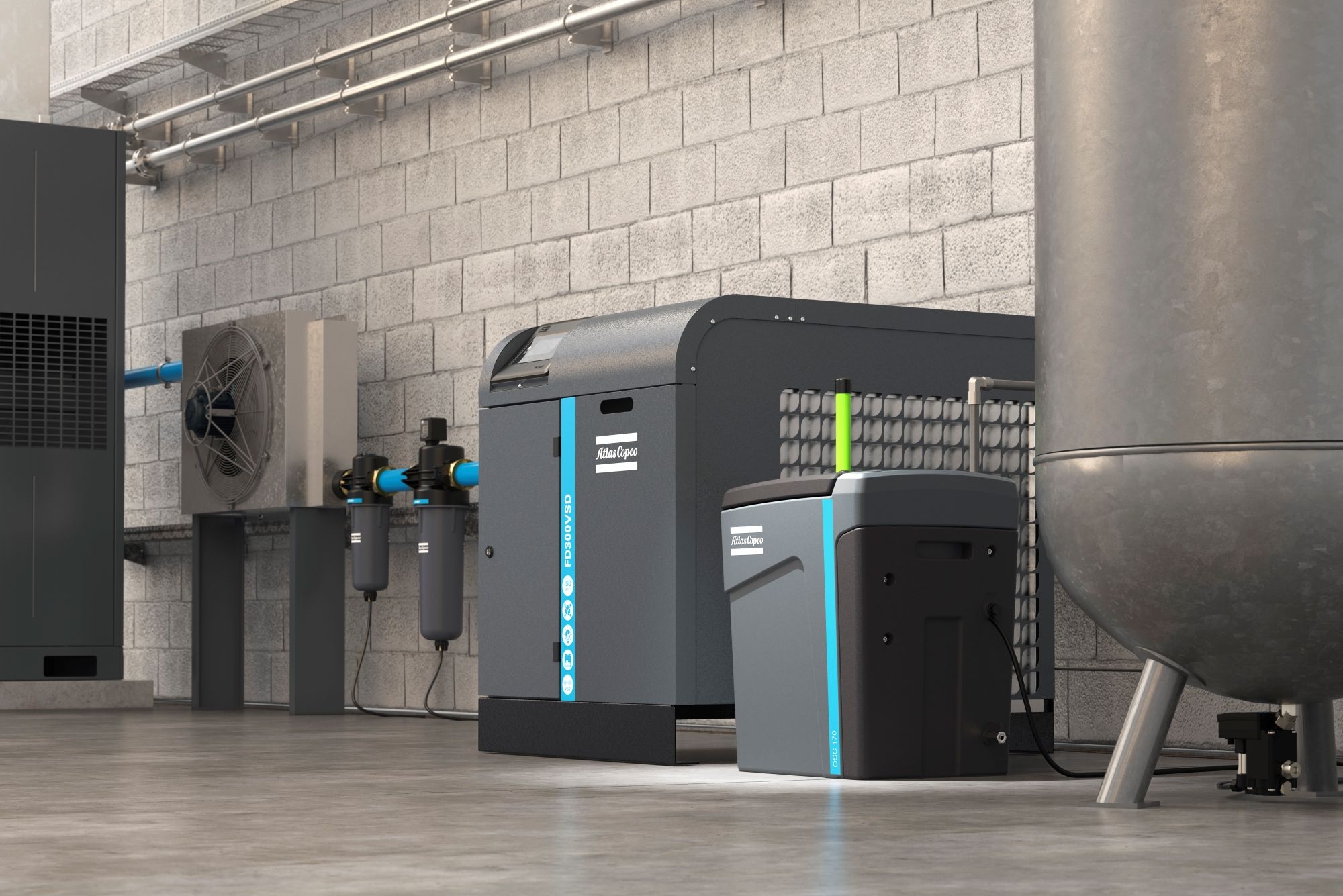
Condensate from the compressor, receiver, filters and dryer can be directed to a central separator. As the liquid enters, it is depressurised and its flow is controlled. Larger solid particles can then be removed before they reach the principal filter media. The condensate subsequently passes through an oil-attracting polypropylene filter. The polypropylene adsorbs oil onto its surface while allowing water to pass through. During this stage, remaining free oil can also rise to the surface and be captured by the filter material.
A further treatment stage uses activated carbon. Its porous surface captures smaller residual oil droplets and “polishes” the condensate before it leaves the unit. The separated oil remains within the filter media for appropriate disposal, while the treated water can be discharged where its residual oil content complies with the applicable local requirements.
Treatment performance must be verifiable
Installing a separator does not automatically guarantee continued compliance. Its performance depends on correct sizing, installation, maintenance and monitoring. Filters have a finite service life. As polypropylene or activated carbon media become saturated, their ability to retain oil will decline. A system that performed correctly when installed may therefore begin to release condensate with a higher residual oil content if the filtration media are not replaced at the appropriate time.
Operators should follow the manufacturer’s maintenance instructions and make use of any available indicators or test points. Checking the treated condensate provides evidence that the separator is continuing to work as intended, rather than relying solely on the appearance of the discharged water. Overflow monitoring is also important. A blockage, incorrectly installed drain or restricted flow path could prevent condensate from passing through the treatment stages correctly.
Maintenance arrangements should consequently form part of the site’s wider environmental procedures. Relevant personnel should know where condensate is collected, how the separator operates, when its filters are due for replacement and what action to take if performance falls outside the required level.
Sizing the separator for the complete installation
Oil-water separators must be matched to the amount of condensate the system produces. This requires more than looking at the nominal capacity of the compressor. Operating hours have a direct effect on the volume requiring treatment. A separator selected for a compressor running 12 hours a day may need to be derated if that compressor subsequently moves to continuous operation.
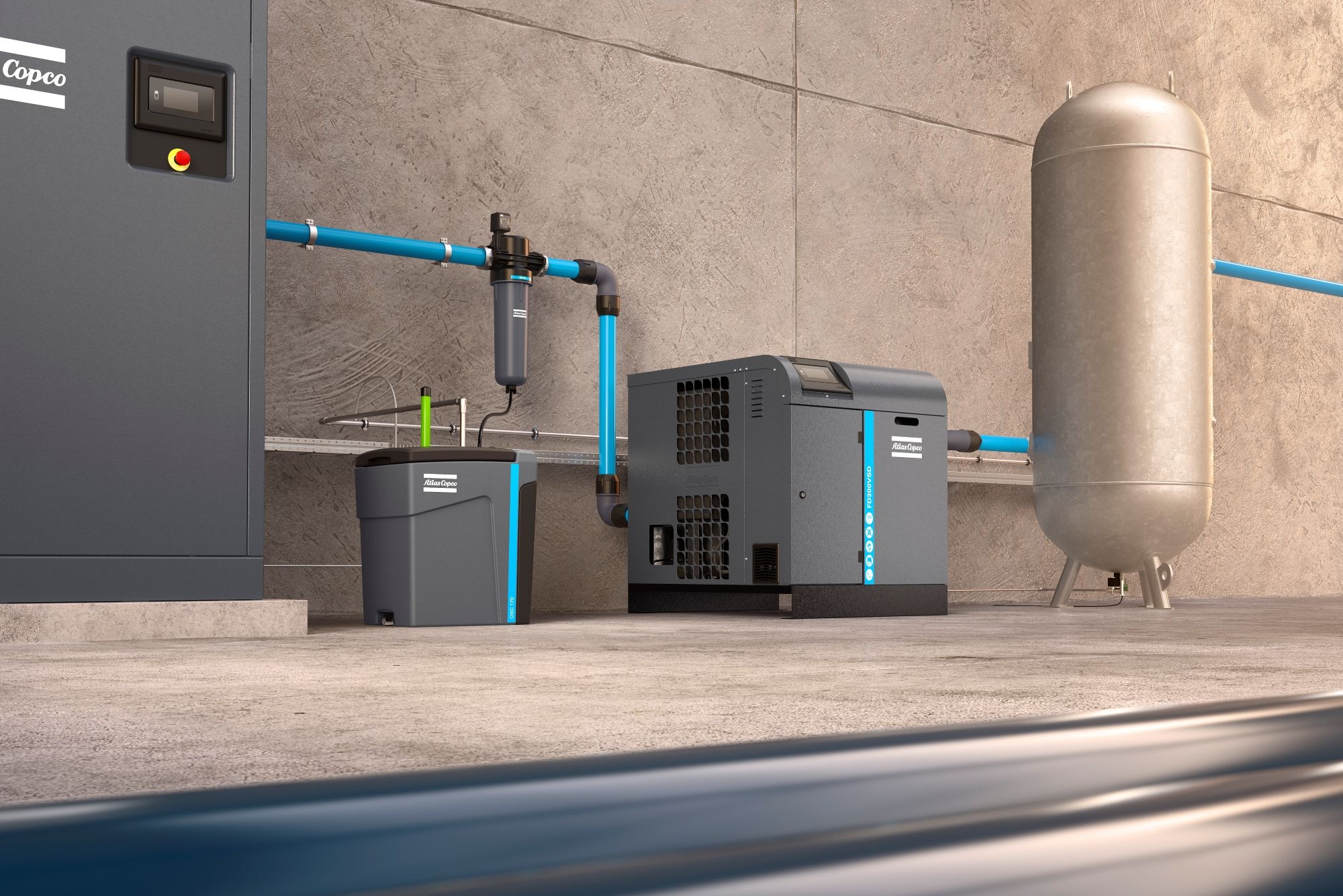
Ambient conditions also influence condensate production. A system operating in a warm, humid environment will generally remove more moisture from the intake air than one operating in cooler or drier conditions. The assessment should also consider condensate collected from the entire compressed air installation. Aftercoolers, receivers, filters and refrigerant dryers may all contribute to the flow entering the separator. Omitting one or more of these sources from the sizing calculation could leave the treatment system undersized.
Working pressure, compressor capacity and the required outlet oil concentration should also be taken into account. Where operating conditions change, the suitability of the condensate treatment system should be reviewed rather than assuming that the original specification remains valid.
An environmental obligation rather than an optional accessory
Condensate treatment can sometimes be viewed as a minor part of a compressed air installation. In practice, it addresses an unavoidable consequence of producing compressed air with oil-injected equipment. A properly specified and maintained oil-water separator enables the oil to be collected for controlled disposal while allowing the treated water to be discharged where local regulations permit. It also gives operators a clearer and more auditable process for demonstrating how contaminated condensate is being managed.
Atlas Copco’s OSC 12-2500 range includes compact single-use units and larger serviceable models for different system capacities. The range uses two-stage filtration with polypropylene and activated carbon and is designed to achieve an outlet oil content of 10 mg/l. An outlet concentration of 5 mg/l can also be achieved in suitable applications, subject to the relevant operating conditions and correction factors.
The OSC 50-2500 incorporates removable filter bags and activated carbon cartridges, while larger models include indicators for filter saturation and correct water passage. A test outlet allows filtration performance to be checked. The OSC 2500 uses a flow divider to distribute condensate evenly between two units.
Whatever equipment is selected, the underlying responsibility remains the same. Industrial sites need to know how much condensate they produce, what contaminants it contains and whether their treatment and disposal arrangements meet the requirements that apply to them.
For more information about compressed air condensation, visit the website.
Related FAQs
What is compressed air condensate?
Compressed air condensate is the liquid produced when moisture in atmospheric air condenses during compression and cooling. It commonly collects in aftercoolers, air receivers, filters and dryers.
Why does compressor condensate contain oil?
In an oil-injected compressor, small quantities of lubricant can enter the condensate during the compression process. The liquid may also contain dust, dirt and other airborne contaminants drawn into the system.
Can compressor condensate be discharged directly into a drain?
Oil-contaminated condensate should not be discharged without first confirming and meeting the applicable local requirements. In many regions, untreated condensate cannot be released directly into the public sewer and must first pass through an appropriate oil-water separation system.
How much condensate does a compressor produce?
The amount varies according to compressor capacity, operating hours, temperature, humidity, working pressure and air treatment equipment. Under moderate conditions, a compressor rated at 30 m³/min may produce approximately 17 litres an hour at the aftercooler.
How does an oil-water separator work?
Condensate is directed into the separator and depressurised. Larger particles are removed before the liquid passes through oil-attracting polypropylene filtration media. Activated carbon is then used to capture smaller residual oil droplets before the treated water leaves the unit.
What residual oil level is acceptable for discharge?
There is no universal limit. Requirements vary by location, wastewater authority and discharge route. Operators should confirm the exact limit that applies to their site and select and maintain the separator accordingly.
How often should oil-water separator filters be replaced?
Replacement intervals depend on the separator, system loading and operating conditions. Filters should be changed in accordance with the manufacturer’s instructions and any service or saturation indicators. The Atlas Copco OSC range has a specified service interval of 4,000 operating hours under its defined conditions.
What information is needed to size an oil-water separator?
The assessment should consider compressor capacity, daily operating hours, working pressure, ambient temperature and humidity, and all condensate sources connected to the unit. This may include the compressor aftercooler, air receiver, filters and refrigerant dryer.
