
3 min read • published in partnership with AddQual
Digital qualification is becoming aerospace’s competitive advantage, says AddQual
As aerospace manufacturers accelerate production and MRO providers respond to unprecedented global demand, competitive advantage is increasingly being shaped by how quickly organisations can qualify, verify and release critical components—not simply how quickly they can manufacture them. Across the aerospace sector, attention continues to focus on digital transformation, artificial intelligence and connected manufacturing.
Yet behind every successful AI initiative sits something far more fundamental: trusted engineering data. For manufacturers producing safety-critical components, every engineering decision depends upon confidence that a part has been measured correctly, validated against specification and supported by complete traceability.
For Derby-based AddQual, this represents one of the most significant shifts taking place across aerospace manufacturing and maintenance. AddQual believes the industry’s next phase of digital transformation will be built around digital qualification, where metrology, inspection, verification and engineering knowledge become connected into a single decision-making environment. Rather than inspection existing as a standalone quality function, manufacturers are increasingly integrating qualification data throughout the lifecycle of a component, from first article inspection and production approval through to repair development, reverse engineering, in-service support and future maintenance programmes.
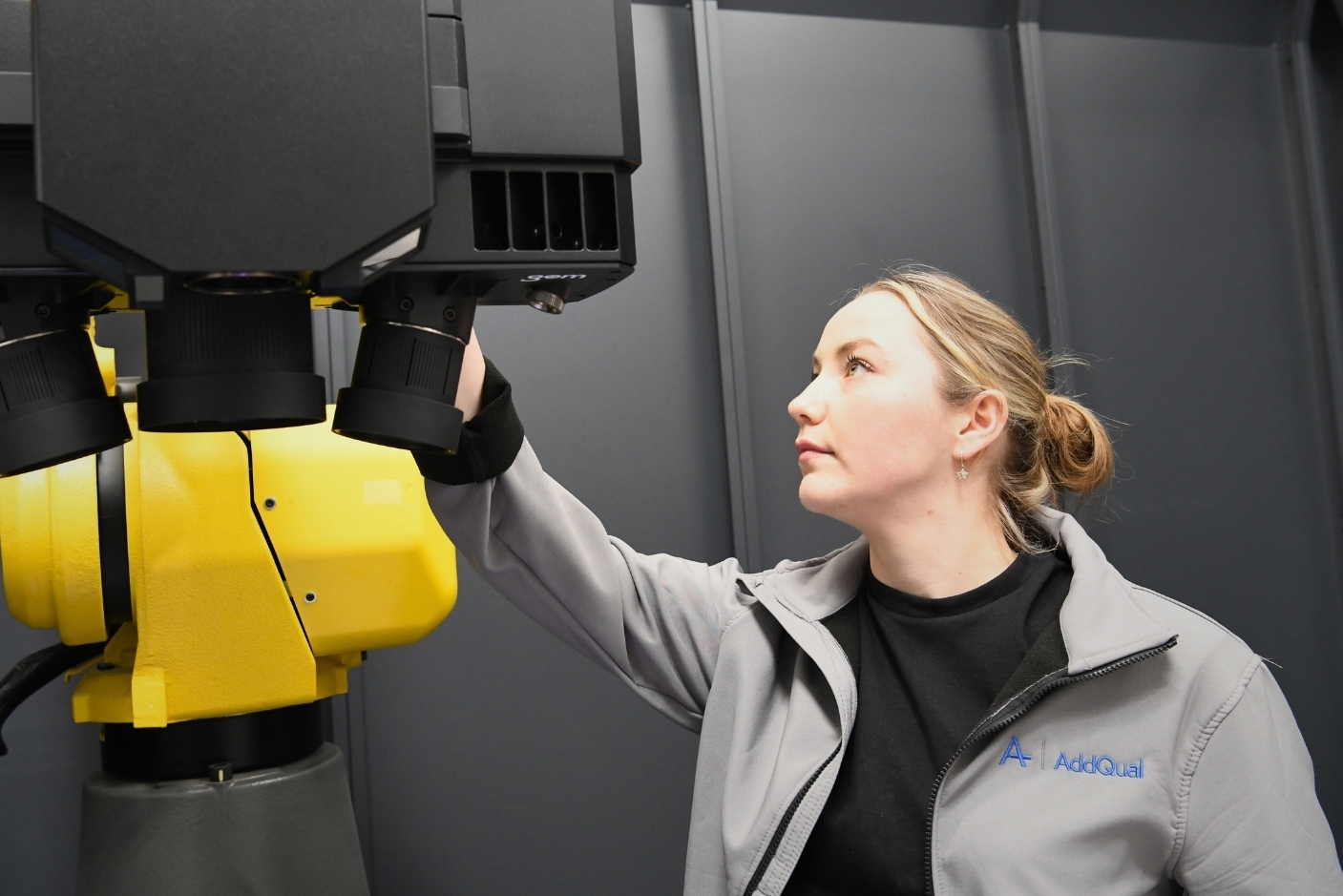
AddQual connects aerospace metrology, inspection, and verification into a single digital platform to accelerate decisions and support digital twins / Picture: AddQual
This approach aligns directly with AddQual’s expanding portfolio of qualification and inspection services, including FAIR and LAIR reporting, PPAP support, inspection planning, engineering investigations, re-engineering, turnkey plant support and increasingly sophisticated digital verification platforms. Ben Anderson, Managing Director of AddQual, said: “Manufacturers already collect enormous quantities of inspection data. The real opportunity is transforming that information into engineering confidence. Qualification should accelerate decisions, support production and provide complete traceability throughout the life of a component.”
That philosophy underpins AddQual’s continued development of MiDAS, its digital manufacturing intelligence platform, and AtlasQual, the company’s next-generation digital qualification environment. Together, the platforms are designed to create a connected digital thread that captures metrology data, inspection evidence, engineering knowledge and qualification records within a single managed environment. Instead of engineers navigating multiple systems and disconnected reports, qualification information becomes immediately accessible, searchable and reusable throughout manufacturing and MRO operations.
As aircraft fleets continue to grow and maintenance activity expands worldwide, the ability to qualify repaired or newly manufactured components efficiently is becoming an increasingly valuable capability. Modern aerospace programmes generate millions of measurement points, inspection images, dimensional records and compliance documents. While collecting this information is essential, manufacturers are increasingly recognising that the greatest value comes from connecting it into an intelligent qualification workflow that supports engineering decisions in real time.
This is particularly relevant as organisations embrace digital twins and data-driven manufacturing strategies. High-fidelity digital models are only as valuable as the engineering evidence that supports them. Accurate metrology, verified geometry and controlled inspection processes provide the trusted foundation upon which digital manufacturing is built. AddQual sees this as a natural evolution of quality engineering. Its roadmap extends beyond traditional inspection activities towards subscription-based digital qualification services through MiDAS, AtlasQual and future intelligent platforms capable of supporting digital twins, managed qualification services, repair scheme development and fully integrated engineering programmes.
Alongside software, AddQual continues to deliver practical engineering capability through tooling design, wire EDM, digital inspection visualisations, consultancy and turnkey qualification support, enabling customers to combine physical manufacturing expertise with digital engineering intelligence. Anderson added: “Digital transformation in aerospace begins with trusted engineering evidence. AI, digital twins and advanced analytics all depend upon reliable qualification data. By connecting metrology, inspection and verification into one digital ecosystem, manufacturers gain faster engineering decisions, stronger traceability and greater confidence throughout the product lifecycle.”
As aerospace manufacturing enters its next phase of growth, qualification is evolving from a compliance activity into a strategic engineering capability. Organisations that can verify parts faster, capture engineering knowledge digitally and create trusted qualification records are placing themselves in a stronger position to accelerate new product introduction, streamline repair development and support increasingly connected manufacturing environments.
For AddQual, the future lies beyond measuring components, rather creating the digital intelligence that allows every qualified part to become a trusted source of engineering knowledge.
Find out more about AddQual here.