
7 min read • published in partnership with PP C&A
Grid expansion needs a more integrated delivery model from scheme to site
Richard Spears, Industrial Market Specialist at PP Control & Automation (PP C&A), explores why a more integrated scheme-to-site delivery model is needed to unlock capacity across the grid supply chain in the UK.
The scale of investment required to expand and reinforce the UK electricity network is well understood, yet less attention is given to how all that infrastructure will move from an engineering requirement to an operational asset.
There is a tendency to think about grid delivery as a linear sequence, and you would assume that is a logical delivery model. It certainly looks that way on paper – the scheme is developed, engineers design it, protection and control requirements are defined, and drawings are produced.
This determines how panels are manufactured before reaching site, and the sequence is completed with installation and commissioning.
In practice, every point where responsibility passes from one organisation to another creates another opportunity for time, information and certainty to be lost.
Any delay is problematic because the challenge facing the grid is getting an unprecedented volume of work through a finite engineering and manufacturing supply chain.
If we want to increase the velocity of grid expansion, we therefore need to look at the capacity within individual parts of that supply chain, but more importantly, at the connections between them.
Some of the most important connections are between protection and control engineering, manufacture, installation and commissioning.
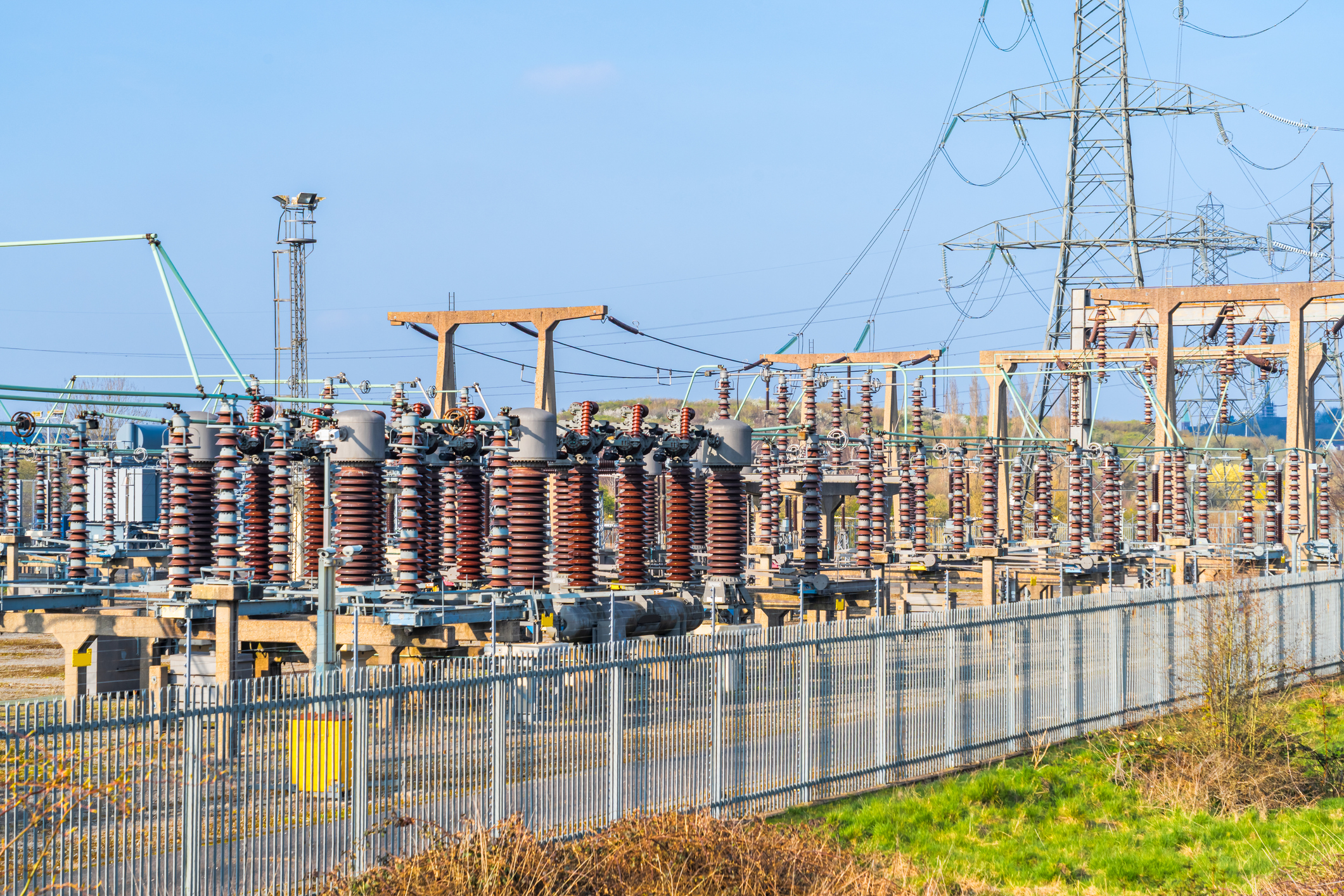
Richard Spears explores how an integrated scheme-to-site model can eliminate delays and speed up UK energy infrastructure delivery / Picture: Getty/iStock
The spaces between
Protection and control systems are fundamental to the safe operation of electricity networks, yet their delivery sits at the overlap of several different disciplines.
A scheme may involve site-specific protection engineering, relay settings, control system interfaces, interlocking, wiring diagrams, cable schedules, I/O requirements, panel layouts, testing and extensive technical documentation. And eventually, somebody must build, install and commission it.
That sounds obvious, but there can still be too much distance between the people engineering a solution and the organisations responsible for turning it into physical equipment.
The opportunity for delay is littered all over these processes. For example, manufacturing teams may find practical issues that require engineering clarification or on-site cable routes, retained equipment or access constraints may expose assumptions that looked straightforward in a drawing.
If these questions are discovered only when installation or commissioning is underway, there is less room to resolve them without affecting the entire programme.
Manageable problems in isolation, but when repeated across large numbers of projects, they become unwanted friction, especially when grid delivery is already under intense pressure.
Every engineering query waiting for clarification or a problem discovered later than it should have been consumes time that could otherwise be used progressing the next project.
The same applies at the site boundary. A panel may pass its factory test and still encounter difficulty if the installation sequence, existing cable terminations or commissioning interfaces are not adequately understood when it was designed.
The industry therefore needs to connect engineering, manufacture and site delivery more closely, so that information and practical constraints move between them before each handover becomes urgent.
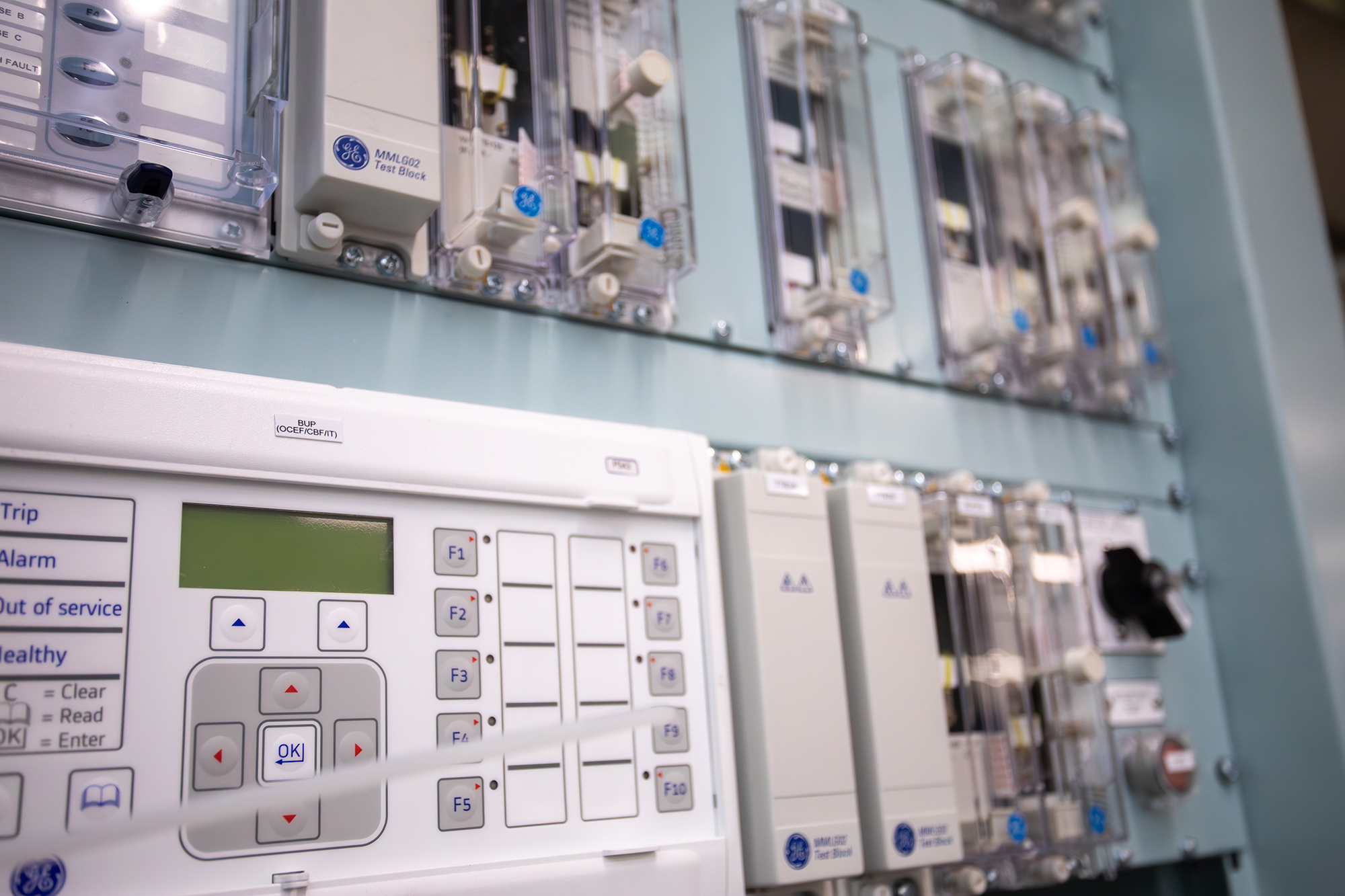
“Every point where responsibility passes from one team to another is an opportunity for time and information to be lost.” / Picture: PP C&A
Compounding the issue
This becomes even more important when dealing with existing transmission infrastructure. The future grid will not be built entirely through new substations on untouched sites. A substantial part of the work involves extending, modifying and reinforcing infrastructure that is already operating.
There may be equipment that is being replaced, equipment that is being retained and equipment whose function must be maintained throughout the transition.
The engineering is therefore not simply about designing the new system, but rather, understanding how the new system lives alongside the old one.
Transmission Engineering Services’ (TES) work at Thorpe Marsh provides a good example. The project involved replacing protection systems across three 400kV mesh corners whilst using an overlay scheme that required complex interface engineering because of network constraints. The engineering scope extended through site-specific scheme design, interfaces with retained equipment, protection settings, relay configuration, control-system I/O information, Factory Acceptance Test (FAT) and drawing updates.
That is a useful illustration of a much wider point – the more complex the interface, the less useful it becomes to think of engineering, manufacture and implementation as isolated activities.
Design for delivery over design completion
The design objective needs to be centred around a project being ready to move successfully through manufacture, installation, testing and commissioning. If viewed as a job to be completed, issues illustrated earlier may not get passed along soon enough. Simply completing the work and thinking ‘downstream’ are very different things.
Designing for delivery means considering ‘downstream’ requirements much earlier. It covers everything from how the panel will be built and how robust the manufacturing information is, to clearly defined interfaces, cable schedules, wiring diagrams and I/O requirements all aligned.
There are many considerations, but the positive is that they all increase engineering rigour. They move some of the problem-solving activity upstream, where it is generally easier, faster and less expensive to resolve.
In protection and control, that is very relevant because the engineering package ultimately becomes a set of physical systems.
TES’s own capability reflects that relationship. Its transmission engineering scope includes site surveys, Design Intent Documents, schematics, General Arrangements, wiring diagrams, cable schedules, interface engineering, relay configuration, settings, pre-FAT and FAT alongside project management and design governance.
Those activities span much of the journey between the initial engineering requirement and the point at which a system is ready to enter service.
Connecting that expertise more closely with manufacturing and site delivery creates the opportunity for the handover itself to become part of the engineering process rather than an event that happens after it.
Early input from the people responsible for installation and commissioning helps test those assumptions. It can clarify site access, interfaces to existing assets, the sequence of work and the evidence needed at handover before a finished panel arrives.
Discovering a design query on-site is the costliest place to fix it. Moving problem-solving upstream is generally easier and less expensive to resolve / Picture: PP C&A
Integration does not mean one company doing everything
There is an important distinction to make. A more integrated delivery model does not necessarily mean creating larger organisations capable of delivering every element of a grid project internally. In fact, that could simply replace one problem with another.
Transmission infrastructure demands specialist knowledge. Protection engineering, system studies, panel manufacture, civil engineering, installation and commissioning all require different capabilities, people and experience. The opportunity is to eliminate unnecessary separation between specialists, not the specialism itself.
This means building delivery models around complementary capabilities. It means engineers understanding the realities of manufacture. It means manufacturers becoming involved early enough to influence buildability. And installation and commissioning specialists need sufficient visibility of the design and test approach to plan how the system will be put into service.
When all sides work from a shared understanding of what needs to happen to reach site, rather than optimising their own individual stage of the programme, it means recognising that collaboration itself can create additional capacity.
If better integration reduces design queries, prevents avoidable revisions, improves manufacturability and accelerates testing and delivery, then the same engineering and manufacturing resources can potentially progress more work. Those resources are scarce, so the idea alone is compelling.
Real-world connected capability
This is the thinking behind a new collaboration between PP Control & Automation (PP C&A) and Transmission Engineering Services (TES).
TES brings specialist transmission engineering capability across protection and control design, interface engineering, settings, configuration, testing, CAD, engineering governance and project management.
Its project experience includes protection and control engineering across major 132kV, 275kV and 400kV schemes, whilst the business holds NERS Design Accreditation up to 132kV. TES projects include South Shields 275kV, Eastern Green Link 1, Dinorwig 400kV, Bramley-Melksham and Didcot 400/132kV.
PP Control & Automation brings the manufacturing capability required to convert that engineering into repeatable, tested protection and control systems at scale.
The collaboration can now support installation and commissioning alongside design and build through specialist site delivery capability. The scope and responsibilities for each stage can be agreed for the project, as technical information is coordinated across the interfaces.
Having read what you’ve read so far, the rationale for bringing those capabilities closer together should be straightforward. Importantly, engineers remain engineers and manufacturers remain manufacturers.
In practice, manufacturability can influence engineering earlier. Production queries can be resolved with less distance between the organisations. FAT requirements can be considered alongside site testing and commissioning needs. Documentation can be developed for both factory and field use, with installation constraints fed back whilst changes are still manageable.
The result should be a better panel, but more importantly, it should be equipment, information and a site delivery plan that work together.
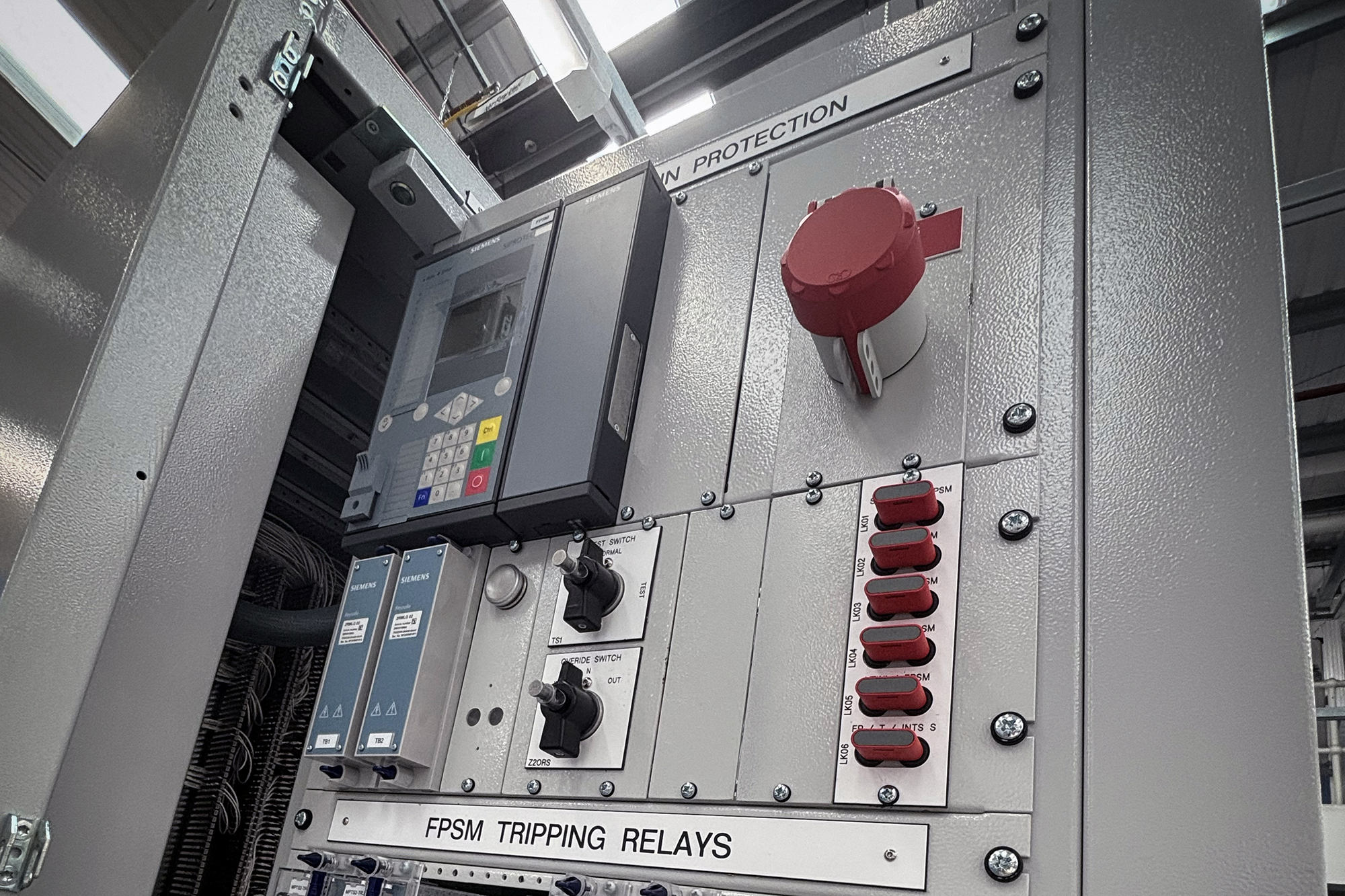
TES’s engineering scope spans the entire journey between design intent and site-ready operational assets / Picture: PP C&A
Capacity is about flow as much as headcount
The grid supply chain will undoubtedly need more people, from engineering, to manufacturing, to commissioning capability. But recruitment and investment alone are questionable as an effective solution to that challenge.
Capacity is also determined by how effectively work moves through phases. When PP C&A and TES started working together, the objective was to build the systems to achieve this.
Imagine two or more organisations each increasing their resources by 20%, but continuing to exchange information through slow, fragmented and heavily transactional handovers.
Now compare that with the same organisations improving the way work flows between them: earlier involvement, clearer information, faster technical resolution and greater visibility of downstream requirements.
Both approaches add capacity but only one requires all of it to come from adding people. That is why integration should be seen as more than a procurement or partnership issue. It is a productivity issue for the entire grid supply chain. After all, the industry needs to increase throughput, not simply activity.
The scale of grid expansion ahead means we will need every available source of additional capacity.
Some will come from recruitment. Some will come from investment in facilities and technology.
And some can come from something much simpler: joining up the capability we already have. Perhaps that will prove to be the most important change of all.
About PP Control & Automation
PP Control & Automation (PP C&A) is a strategic manufacturing partner to OEMs and machine builders, providing control panels, cable harnesses, electronics, mechanical assembly and complete machine build.
From its world class facility at the heart of the UK, the company helps customers scale production, reduce supply chain complexity, improve flexibility and bring products to market faster.
About Transmission Engineering Services
Transmission Engineering Services (TES) provides specialist electrical engineering expertise for transmission and distribution projects, with capabilities spanning protection and control, substation design, interface engineering, settings, testing and project delivery.
NERS-accredited up to 132kV, the business supports complex grid infrastructure, including high-voltage substations, brownfield upgrades and protection system replacement across the UK.
