
5 min read • published in partnership with Portakabin
How manufacturers can scale into defence without the pain of operational disruption
Britain’s renewed defence focus creates huge opportunities for new and established suppliers, but winning the work is only half the challenge. Modular buildings provide the capacity to take on more work while keeping current operations running smoothly.
A defence contract win should be cause for celebration, but for manufacturers already operating close to capacity, where will the additional space for production, materials and people come from?
That question is becoming more pressing as the UK government pushes for stronger domestic defence capability, with an emphasis on greater participation from small and mid-sized enterprises (SMEs). The Ministry of Defence spends around £5bn a year with SMEs and has committed to reach £7.5bn by 2028.
The growth in defence spending opens the door to new suppliers and a path to higher-volume contracts for existing suppliers. But recent research suggests many manufacturers may struggle to respond as demand rises.
A survey from the Manufacturing Technologies Association (MTA) found that 74% of manufacturers were willing to build capacity in strategically important sectors including defence. Only around a quarter said they could meet increased demand immediately, however, while 29% said they couldn’t do so at all. A lack of space was cited by 28% as their biggest constraint.
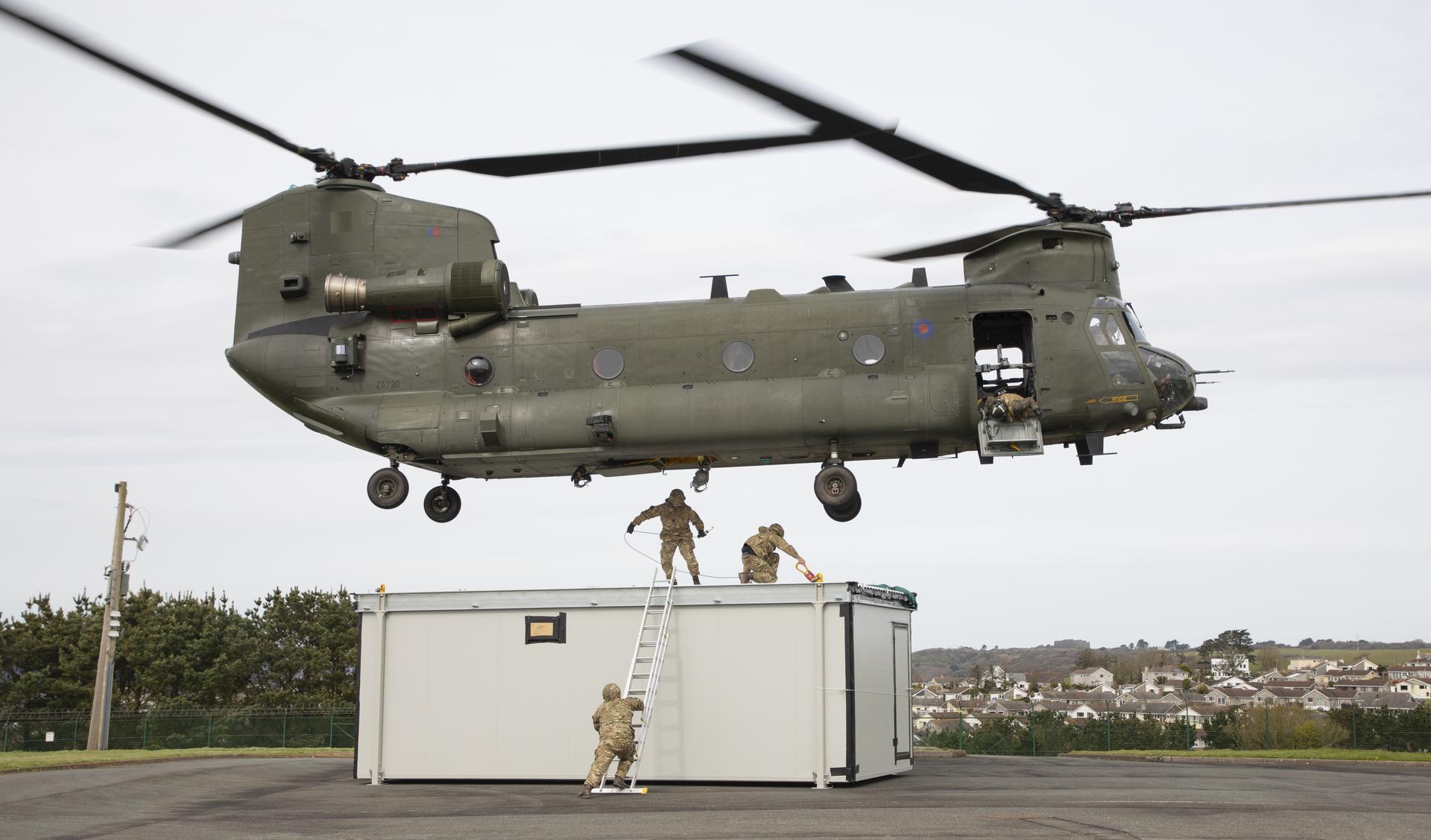
For manufacturers looking to scale into defence, a lack of space doesn’t have to mean a lack of capacity to grow.
Don’t let your existing site dictate what’s possible
The obvious answer to a lack of capacity is more production space, but that isn’t necessarily where the squeeze lies. The first step is to look at how effectively the existing footprint is being used.
“When production scales up, businesses focus heavily on throughput and machinery, but a sudden influx of new staff and support needs can quickly create a bottleneck,” says Sarah Hewitt, Manufacturing Sector Development Manager at Portakabin.
“Without dedicated office space and meeting rooms, collaboration can break down, leading to admin delays. If lab space doesn’t expand alongside manufacturing, quality assurance backs up and impacts production. And when these functions take up valuable factory-floor space, moving them into flexible, modular buildings onsite can release capacity for production without needing to relocate the operation.”
In defence, that can also mean creating specialist infrastructure away from the main production environment. For Thales UK, Portakabin provided a secure modular building for storing radar equipment, incorporating reinforced construction and specialist security features.
The same principle applies beyond defence. Special Melted Products, a leading Sheffield manufacturer, needed a modern staff training facility at one of its three local sites. After visiting the Portakabin Sheffield Visitor Centre, the team worked with Portakabin to customise a standard modular unit, adding an access ramp for inclusivity and a branded glazed partition that lets in natural light while keeping the space open-plan. Fully equipped with data services, professional furniture and air conditioning, the building was delivered and installed within four weeks, without disrupting day-to-day operations.
For manufacturers under pressure to grow, reconfiguring the footprint, moving non-production functions out of production areas and adding dedicated facilities where needed, can add capacity without disrupting core operations.
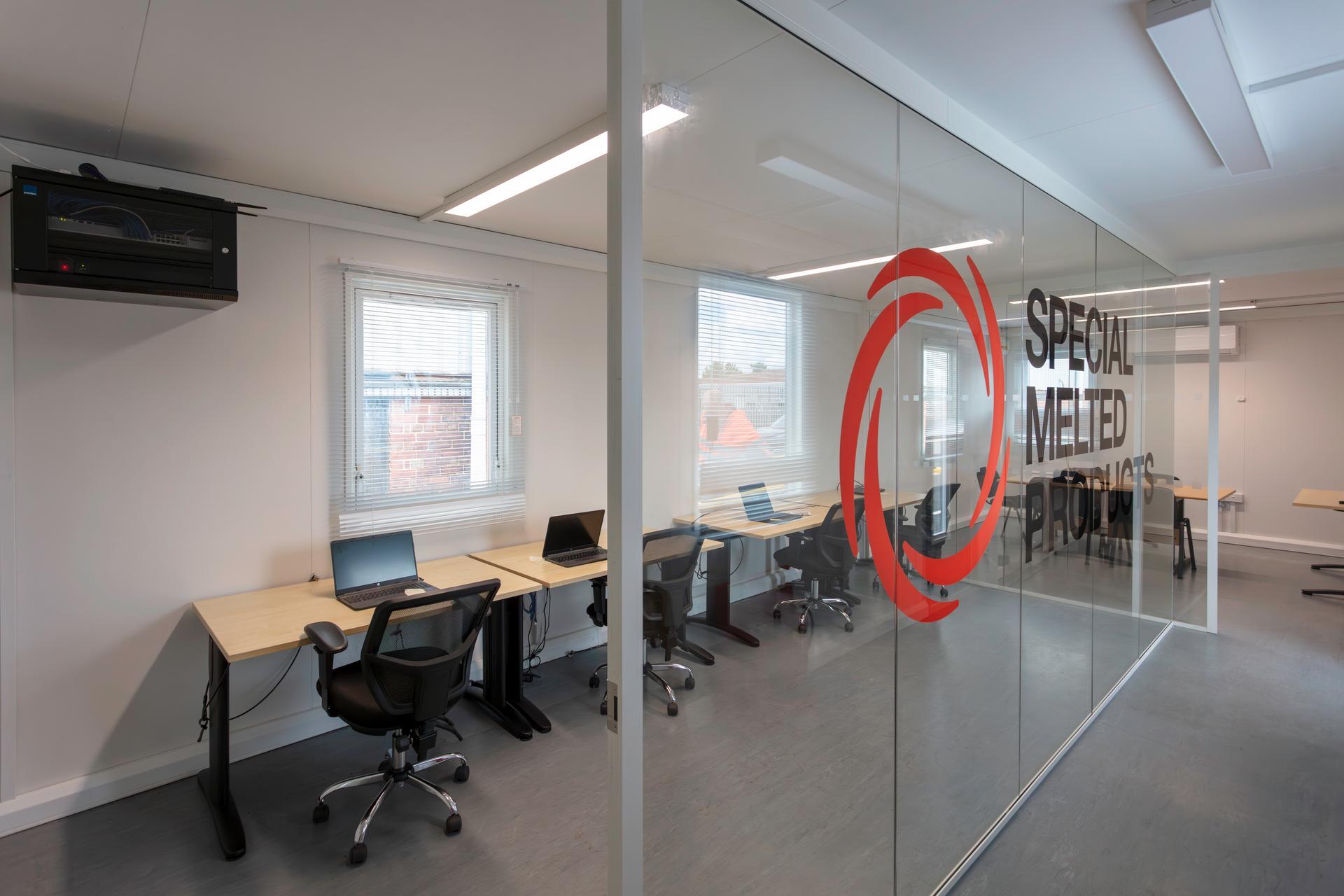
Modular buildings can provide additional space for production, materials and people without needing to relocate operations.
Growth has to work for staff too
Capacity is also about the people needed to deliver the work. Portakabin is seeing rising demand for improved breakout areas and new wellbeing facilities as manufacturers recognise how better workplaces can support recruitment and retention.
That becomes even more important when a contract win means adding people quickly. Portakabin can respond quickly, with facilities sometimes deployed in days, giving manufacturers a way to accommodate a bigger workforce without waiting for conventional construction.
“As defence spending grows and opportunities open up across the supply chain, manufacturers need to think beyond winning the work to how they will actually fulfil it,” says Matt Ellis, Head of Commercial, GB Sales at Portakabin.
A rapidly growing drone manufacturer, for example, needed additional canteen facilities as its workforce expanded, while an armoured vehicle manufacturer that won a major order needed new toilets, locker rooms and dining areas to accommodate its increased headcount.
Facilities like canteens, showers and gyms may not contribute directly to production, but they are essential to supporting a healthier, more productive workforce. As Matt puts it, manufacturers can have futuristic, high-tech processes operating in buildings that are 60, 70 or 80 years old. A more modern working environment can help businesses meet the needs of a growing workforce and make it easier to attract and retain the people needed to support growth.
Scale in stages, rather than all at once
A challenge of rapid growth is knowing how much space will be needed and how quickly you’ll outgrow it. Growth is rarely linear or predictable, particularly in defence. Infrastructure therefore needs to be able to change with the business, rather than forcing manufacturers to predict exactly what they will need years in advance.
“That is one of the many advantages of modular construction,” says Sarah. “Due to its flexibility, a customer might initially require one or two standalone buildings, then suddenly, due to various reasons such as an increase in new starters, all of a sudden, they need a lot more. This can happen quite frequently, and Portakabin has the ability to add additional structures where needed, link new modular buildings together or with an existing building and even add another storey if required. This creates a frictionless expansion as the business grows.”
How spaces are funded is equally flexible. Depending on the requirement, Portakabin can provide buildings for long-term hire or outright purchase, allowing manufacturers to match their infrastructure investment to their need.
“Growth doesn’t have to mean making a large investment based on a forecast that may change,” says Matt. “Capacity can be added as demand becomes clearer, so businesses can scale without locking themselves into a solution that may not fit a few years down the line.”
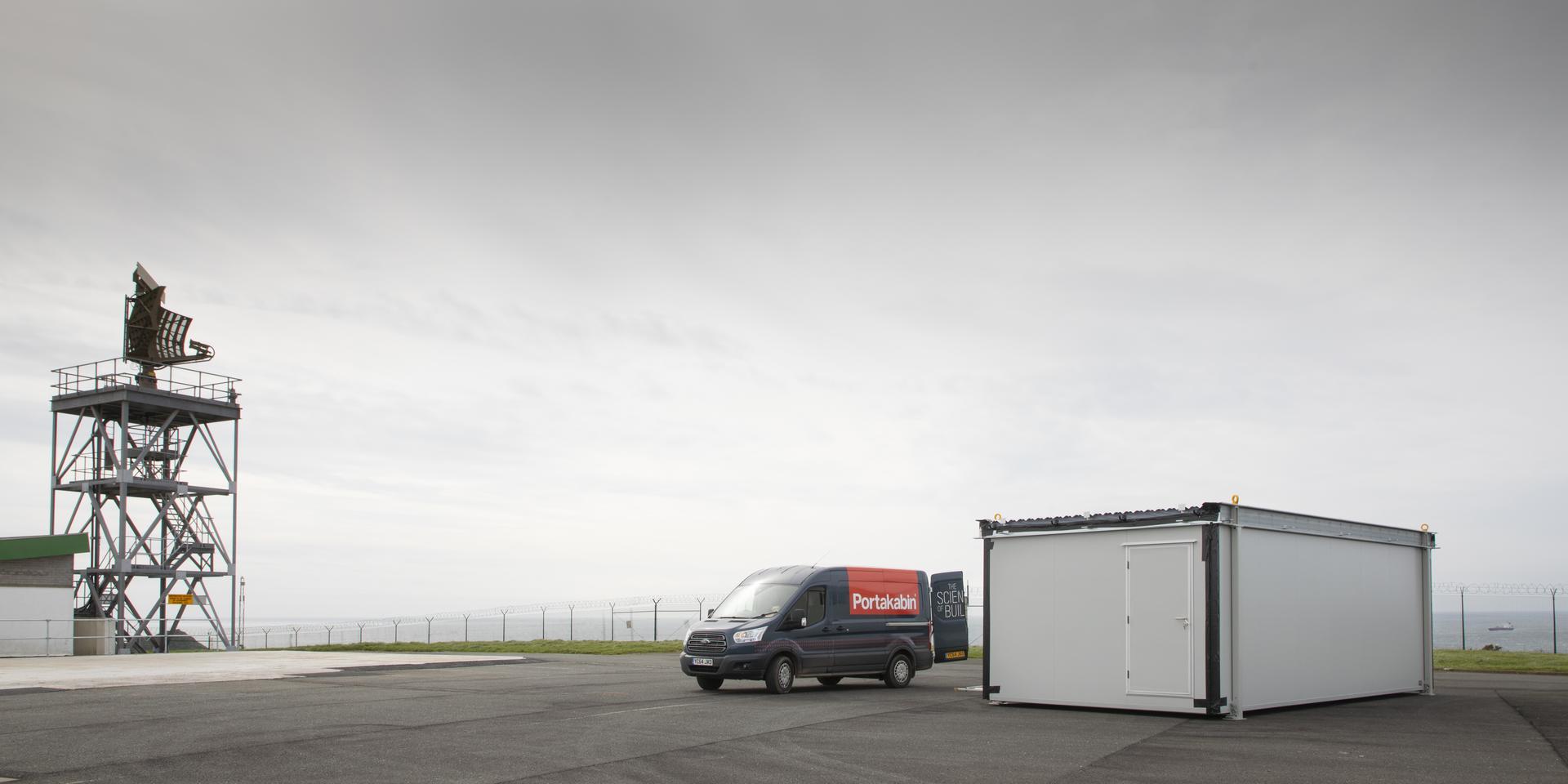
Portakabin offers buildings for long-term hire or outright purchase, allowing manufacturers to match their infrastructure investment to their needs.
Plan the infrastructure before the contract lands
The best time to think about infrastructure is not after the contract has been won. One engineering business discovered that when it needed to host a meeting with a global defence contractor but had no suitable space, they were able to contact Portakabin who was then able to quickly deliver a dedicated meeting facility. The business was successful in winning the order and returned to Portakabin to acquire additional buildings.
Another reason to start conversations early is the complexity involved with being a defence supplier. “Compliance can be tricky to navigate and often a complex process, but we have an experienced team, who understand the necessary processes, and understand the terminology and security classifications,” Sarah says.
“It’s important to have early site assessment, which means that constraints around utilities, access, easements and security can be identified before they become obstacles. Our multidisciplinary design and pre-construction team can develop options tailored to the precise needs of the customer.”
The benefit of modular buildings is that they can be manufactured and fitted out off-site while groundworks take place onsite, arriving largely complete and minimising disruption when installation begins. For defence manufacturers operating under tight timescales and stringent requirements, that means adding the space they need without putting the wider operation on hold.
“Think about what this contract could mean for your business. Don’t think about whether you have the space to deliver it. The space can very quickly be created,” says Matt.
What would winning a defence contract mean for your business?
For manufacturers looking to scale into defence, a lack of space doesn’t have to mean a lack of capacity to grow.
Click here to learn about the rapid, secure and scalable solutions from Portakabin that meet Ministry of Defence specifications and defence compliance standards.