
3 min read - 29 Jun, 2026
JCB Hydromax hits 208mph ahead of world land speed record attempt
British engineering giant JCB has successfully completed UK testing of its hydrogen-powered JCB Hydromax car – reaching 208mph and clearing the way for its world land speed record attempt at Bonneville, USA, in August.
The shakedown runs at RAF Wittering in Cambridgeshire saw the 32-foot car driven by Wing Commander Andy Green OBE reach 208 mph under its own hydrogen power – up from the 177 mph recorded earlier in the programme.
Just as valuable as the speed is what the team has gained: vital data, hard-won engineering insight and the teamwork and communication that can only be built on the track. The crew also refined JCB Hydromax’s hydrogen refuelling process – a key element in ensuring fast, efficient operation on the Bonneville Salt Flats, where turnaround times can decide whether a record run goes ahead.
In August 2006, Andy Green set a world diesel land speed record of 350.092 mph driving the JCB Dieselmax, powered by two JCB engines – a record that still stands. Green will once again take the wheel, returning to the Bonneville Salt Flats in Utah to attempt a new speed record – this time using hydrogen power.
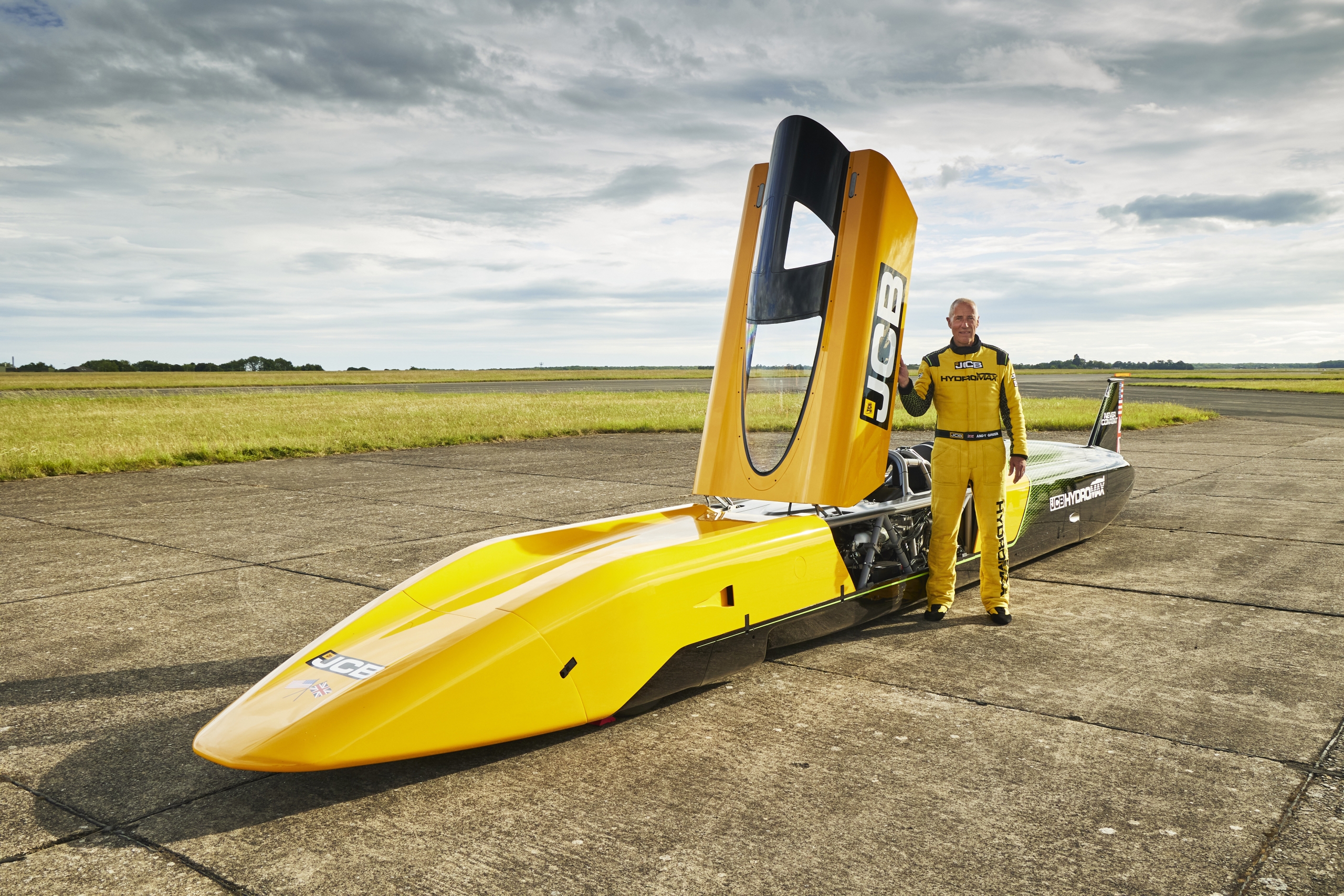
The JCB Hydromax with driver Wing Commander Andy Green OBE at RAF Wittering.
Lord Bamford has spearheaded the company’s £100m investment in hydrogen-powered internal combustion engines, which now power diggers rolling off production lines. Unveiled at JCB’s headquarters in Staffordshire on 12 May, the Hydromax car is powered by two of JCB’s own production-based hydrogen digger engines producing a combined 1,600 bhp.
Anthony Bamford, JCB’s chairman, said: “The UK testing programme has given us everything we had hoped for and more. We have a car that runs, a crew that knows it inside out and a wealth of real-world data that no amount of theory could ever provide. The team has done a magnificent job and our focus now turns entirely to the Salt Flats and a new world hydrogen land speed record.”
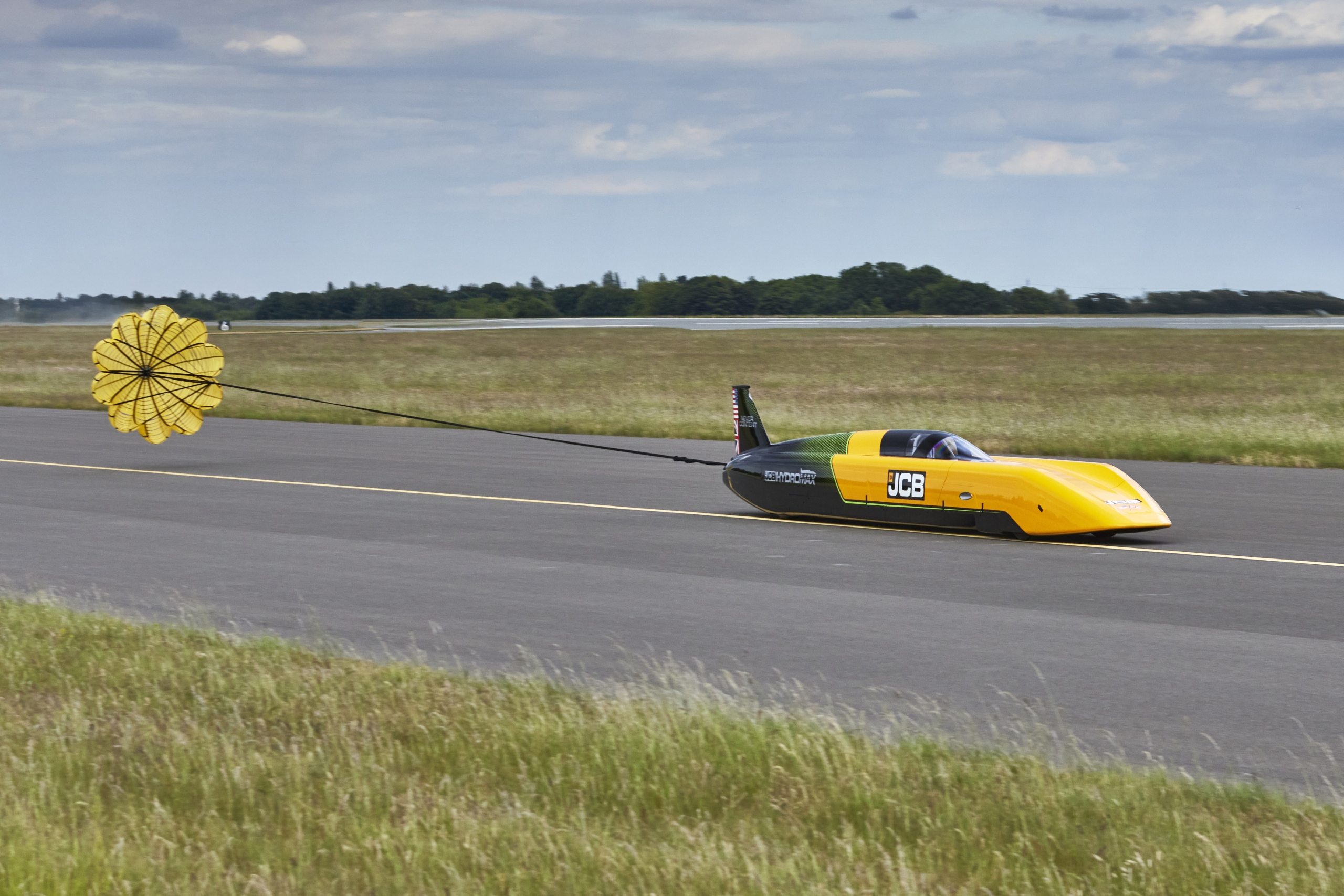
The Hydromax deploys its parachute at the end of a run for safe deceleration from extreme speeds.
Ryan Ballard, JCB’s engineering director, who is leading the project, added: “Reaching 208mph is a tremendous result, but the real value of these tests is what we have learned. We now understand how the car behaves under load, we have refined our hydrogen refuelling, and we have built the teamwork and communication that will be decisive at Bonneville. Every refuel, run and tyre change we have rehearsed here is one we won’t be doing for the first time on the salt. We will arrive fully prepared, with a car and a crew that know exactly what they are doing.”
In Utah, the team will compete at SpeedWeek, run by the Southern California Timing Association (SCTA), before pursuing an officially recognised record under the FIA. The record bid comes ahead of the opening of JCB’s new $500m factory in San Antonio, Texas.
JCB has long pushed the limits of speed: in 2019, the JCB Fastrac became the world’s fastest tractor at 135.191 mph, and in 2014, the JCB GT set the backhoe loader record at 72.58 mph.
