
4 min read • published in partnership with KUKA
Raising the standard for industrial robot safety: what to expect in January 2027
The introduction of ISO 10218-2:2025 marks an important development in industrial robot safety. Neil Mead, Marketing & Strategy Director at KUKA Robotics, examines what the revised standard means for robot manufacturers, system integrators, and end users, and how the industry is adapting to its requirements.
The publication of ISO 10218-2:2025, covering industrial robot applications and robot cells, represents the most significant update to robot safety requirements in more than a decade. While the standard becomes harmonised through national adoption over the coming months and will effectively shape new robot installations from 20 January 2027 onwards, it’s already making an impact across the robotics industry.
For manufacturers investing in automation, understanding what has changed – and why – is becoming increasingly important.
Why a new standard is needed
The previous version of ISO 10218-2 was developed at a time when traditional industrial robots typically operated behind physical guarding and safety fences. Since then, manufacturing has seen the rapid growth of collaborative robotics, mobile automation, digital connectivity, simulation technologies, and increasingly complex multi-robot systems.
The 2025 revision reflects this changing landscape. It provides a more comprehensive framework for managing risks across the entire lifecycle of a robot application, from design and integration through commissioning, operation, maintenance, and eventual decommissioning. It also aligns robot safety requirements more closely with modern machinery safety principles and emerging digital manufacturing practices.
Importantly, the update recognises that robot safety can no longer be viewed purely as a hardware issue. Software, system architecture, functional safety, and cybersecurity now play increasingly important roles in ensuring safe operation.
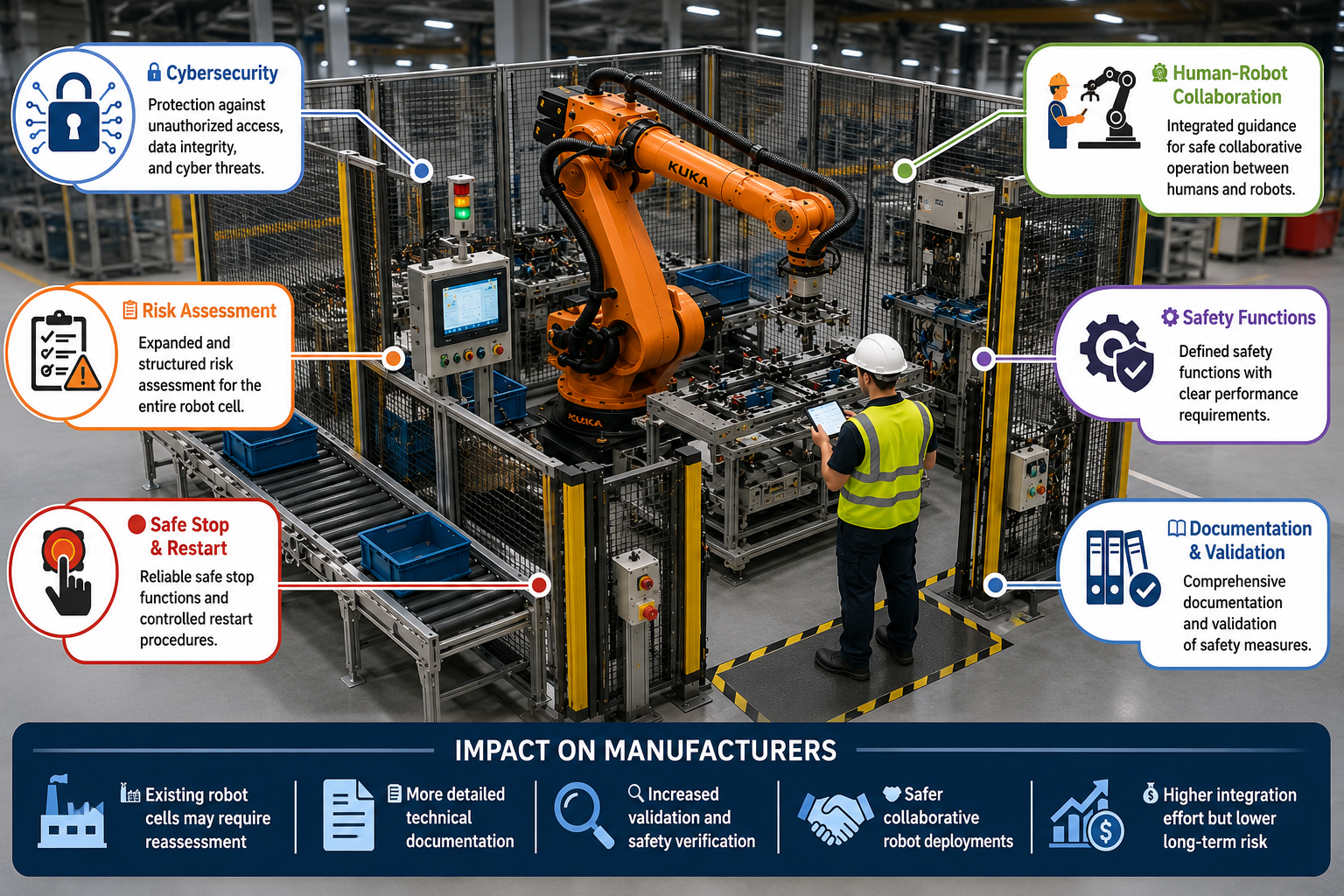
New safety requirements under ISO 10218-2:2025 will reshape how industrial robots and automated cells are designed, integrated, and validated from January 2027.
What does ISO 10218-2:2025 cover?
ISO 10218 is divided into two complementary parts. Part 1 addresses the robot itself as a machine, while Part 2 focuses on the integration of robots into complete applications and robot cells.
The new edition expands significantly on the previous version and provides detailed requirements covering:
• Risk assessment and risk reduction
• Cell design and safeguarding
• Integration of robots with other machinery
• Commissioning and validation
• Operation and maintenance procedures
• Functional safety requirements
• Collaborative robot applications
• Documentation and information for users
The standard also strengthens requirements around safety validation and verification, ensuring that safety measures are not simply designed but are demonstrably effective in real-world operation.
A shift in the approach to robot safety
One of the most significant changes is a move away from a prescriptive, one-size-fits-all approach towards a more application-specific methodology.
Previous editions often relied on broadly defined safety performance requirements. The new standard places much greater emphasis on detailed risk assessment and determining the appropriate level of functional safety for each individual application. Annexes within the standard provide guidance on a wide range of robot safety functions and their associated performance requirements.
Another major development is the integration of collaborative robot guidance directly into the ISO 10218 framework. Previously, collaborative applications were largely addressed through the separate ISO/TS 15066 technical specification. The new standard effectively incorporates these principles into the core robot safety standard, creating a more unified approach to human-robot collaboration.
This means that organisations can no longer assume that simply purchasing a collaborative robot automatically delivers a safe collaborative application. The focus shifts firmly towards validating the safety of the entire application, including tooling, workpieces, operator interaction, and operating procedures.
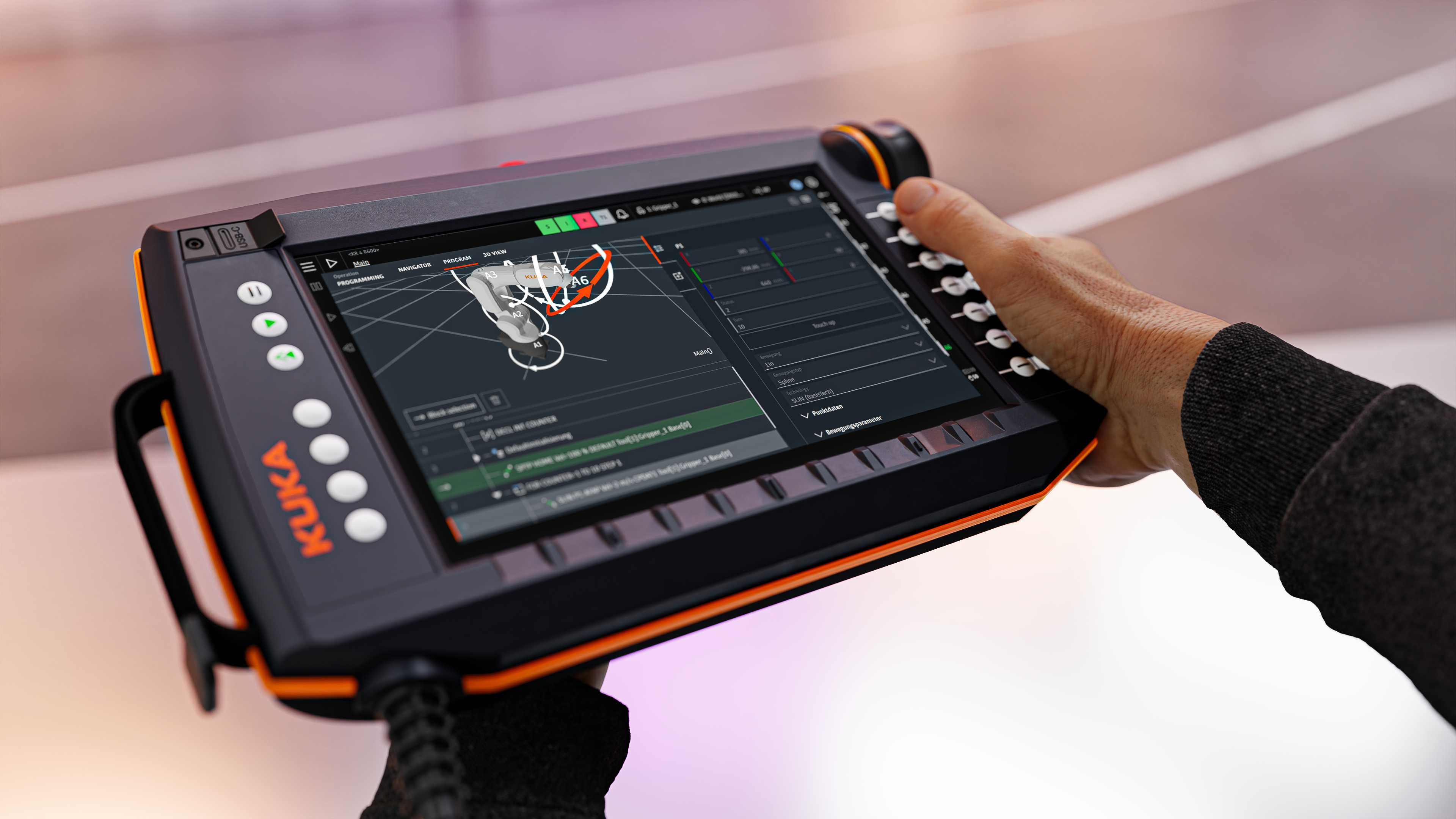
KUKA’s iiQKA.OS2 operating system is ISO 10218:2025 compliant and IEC 62443-certified, therefore ideally equipped for future challenges.
What does this mean for industry?
For robot manufacturers, the revised standard demands enhanced safety functionality, clearer documentation, and greater support for system-level risk reduction.
For systems integrators, the impact is even more significant. Integrators will need to demonstrate more rigorous risk assessments, safety validation processes, and documented evidence of compliance throughout the project lifecycle. The days of relying solely on standard guarding solutions are rapidly disappearing.
End users, meanwhile, will benefit from safer, more flexible automation systems. However, they will also need to take a more active role in maintaining compliance. Any modifications to robot applications, production processes or operating procedures may require updated risk assessments and safety validation.
For UK manufacturers planning new automation projects, the key message is clear: safety must be considered from the earliest design stages rather than added later as an afterthought.
How KUKA is preparing for the new standard
As one of the world’s leading robotics suppliers, KUKA has been preparing for these changes through both software and engineering innovations.
At the centre of this strategy is iiQKA.OS2, KUKA’s new common operating system designed to run across the company’s entire robot portfolio. The platform combines proven KUKA control technology with a modern web-based user interface, modular safety architecture, and advanced digital engineering capabilities. KUKA describes the system as being ready for the requirements of ISO 10218:2025 while also addressing growing cybersecurity expectations for connected manufacturing environments.
Complementing the operating system is iiQWorks, KUKA’s new engineering suite that supports planning, simulation, offline programming, and deployment. Working together, iiQKA.OS2 and iiQWorks enable the creation of a complete digital twin of a robotic system before physical installation takes place. This allows manufacturers and integrators to validate processes, optimise cell layouts and identify potential safety issues much earlier in the project lifecycle.
The ability to virtually commission and validate robotic systems is likely to become increasingly valuable as safety requirements become more detailed and evidence-based under the new standard.
Looking ahead
ISO 10218-2:2025 reflects the reality of modern manufacturing. Robots are no longer isolated machines working behind fences; they are increasingly connected, collaborative and integrated into wider production systems. For more in-depth analysis on ISO 10218, cobot safety and cybersecurity issues, read more on the KUKA website here: KUKA’s ISO 10218 expert view
The revised standard acknowledges this transformation by placing greater emphasis on holistic risk assessment, functional safety, and lifecycle management. While compliance may require additional effort from suppliers, integrators and end users, the result should be safer, more productive, and more adaptable automation systems.
For manufacturers considering future automation investments, now is the time to understand the implications of the new standard and ensure that both technology partners and internal teams are prepared for the next generation of robot safety.
