
5 min read • published in partnership with PP C&A
The Great Grid Upgrade’s hidden bottleneck: protection and control capacity
As Britain accelerates investment in grid infrastructure, protection and control capacity could become a critical delivery constraint. Richard Spears, Industrial Market Specialist at PP Control & Automation (PP C&A), explores the hidden systems and supply chain capability needed to turn grid ambition into operational reality.
Britain’s electricity grid is entering one of the most significant periods of expansion and modernisation in its history. A generational investment, the scale of which is substantial.
Ofgem has approved £28.7bn of investment across our electricity transmission and gas networks for the five years beginning in April 2026. The settlement includes 80 electricity transmission projects and associated works nationwide, intended to increase capacity through new power lines, substations and other technologies.
National Grid has also launched an £8bn Electricity Transmission Partnership to support a programme covering approximately 130 substations across England and Wales. In Scotland, SP Energy Networks has begun a £12bn programme that includes 12 new major substations and more than 570km of upgraded or replaced lines.
SSEN Transmission, meanwhile, is progressing a £29bn investment programme across the north of Scotland.
Clear investment. Clear need
Britain needs more grid, that much is clear, however, building more pylons, cables and substations is only half of the challenge. Behind every visible piece of grid infrastructure sits a less visible collection of systems that allows electricity networks to operate safely, reliably and intelligently.
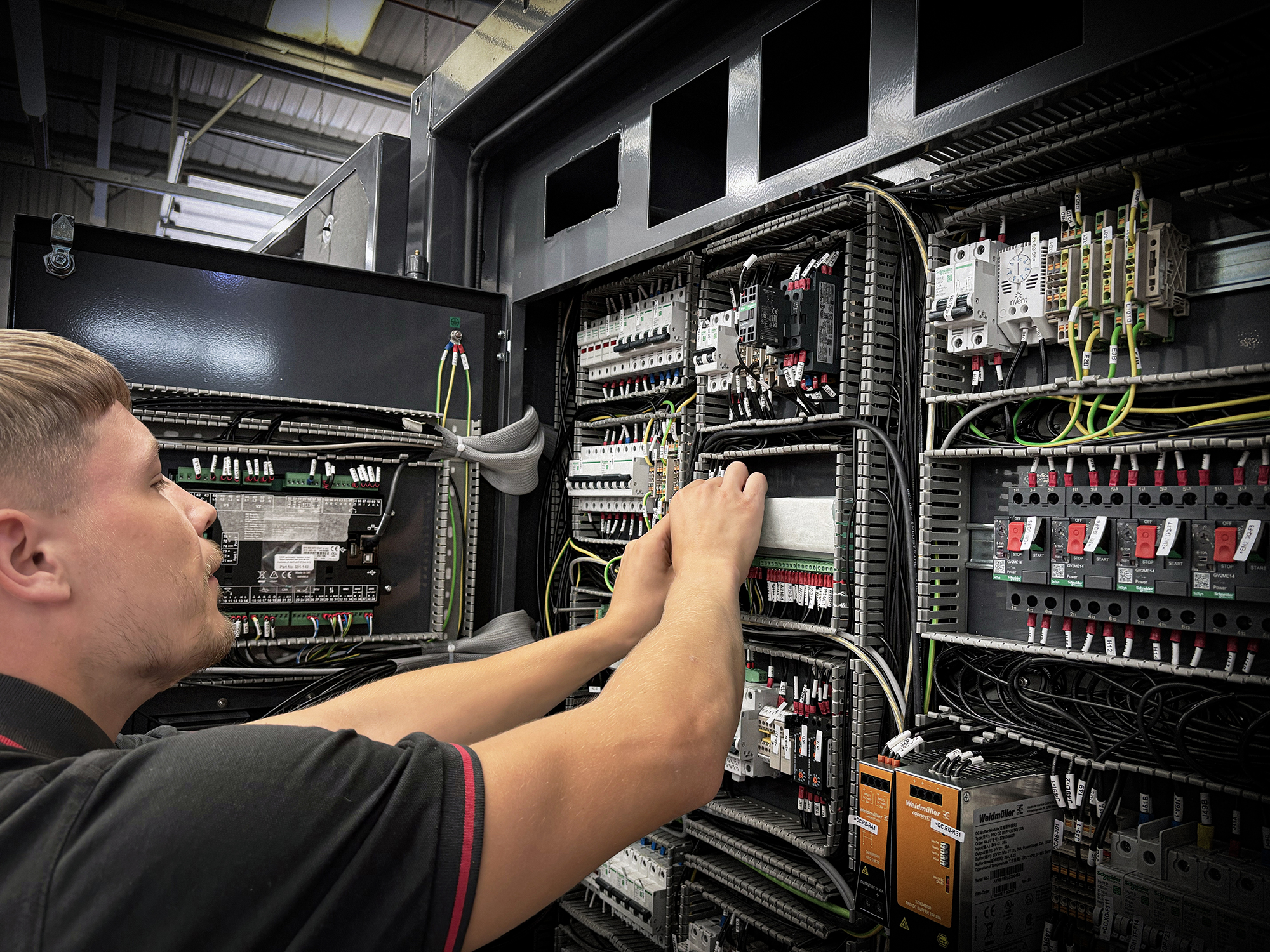
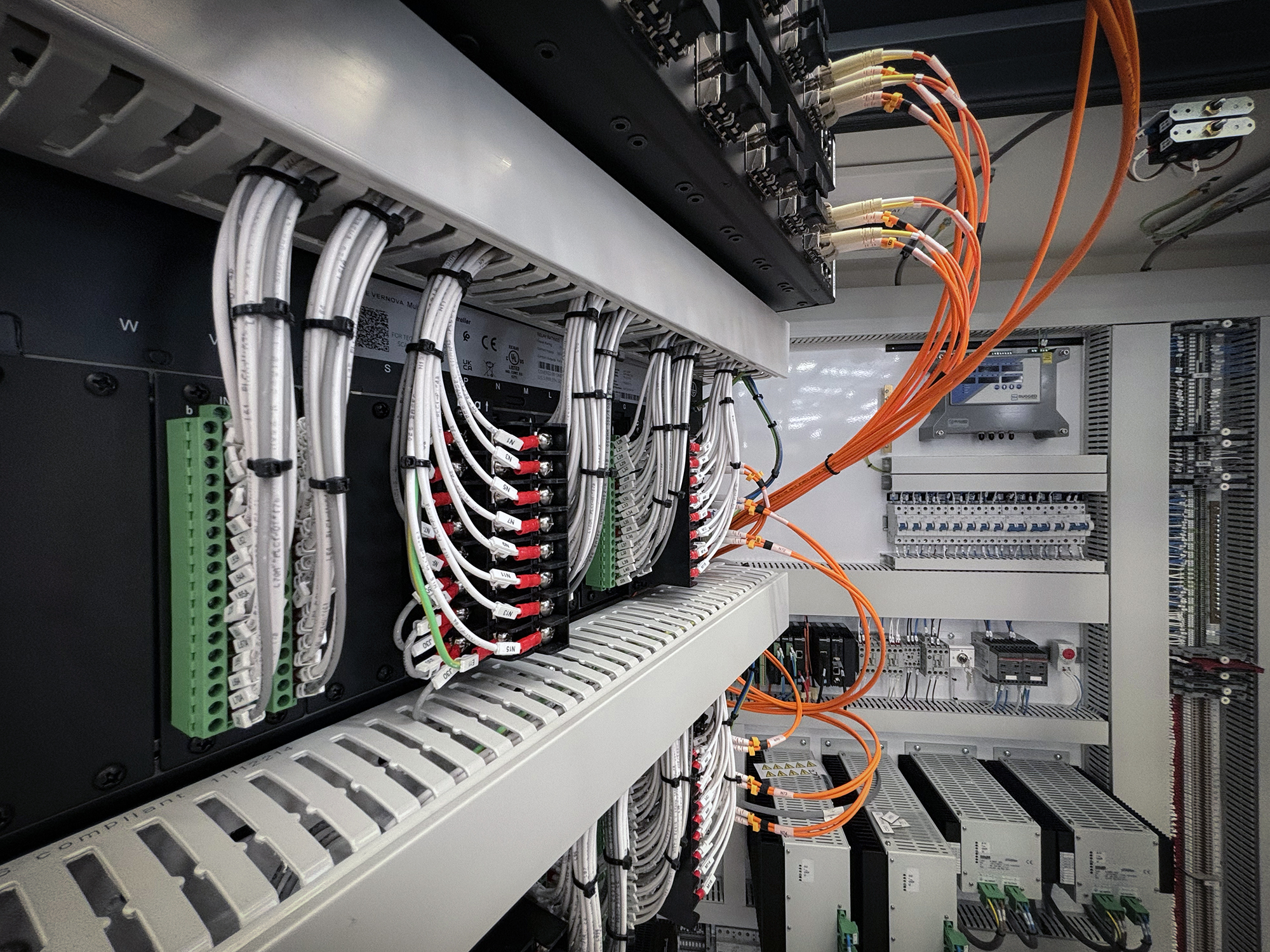
Protection panels detect abnormal conditions and isolate faults. Control systems manage equipment and switching. SCADA and RTU panels communicate with control centres. Metering, marshalling, battery tripping, LVAC, DC auxiliary and communications systems support the day-to-day operation of substations.
These systems are part of the nervous system of the grid, not simply peripheral additions. And with more generation means more demand so the requirement for new infrastructure is coming from both sides of the electricity system.
On the generation side, the UK must connect increasing volumes of offshore wind, solar power, battery storage and other low-carbon technologies. The existing connections process became overwhelmed. The National Energy System Operator reported that the previous queue had grown beyond 700GW, which is around four times the capacity required for 2030.
Projects that were ready to proceed could be left waiting for years behind speculative or less developed schemes. Connections reform is now intended to prioritise projects that are both ready and strategically needed.
At the same time, electricity demand is expected to rise considerably as transport, heating and industry become increasingly electrified.
Government projections state that electricity demand could more than double by 2050, driven by developments including advanced manufacturing, hydrogen production, housing, electric transport infrastructure and data centres. Ministers have also identified physical network build times and supply-chain constraints as two of the major barriers to connecting strategically important projects.
The growth of data centres illustrates the scale and concentration of this new demand.
National Grid’s Uxbridge Moor substation is expected to connect more than a dozen new data centres. Their combined requests require around 1.8GW of capacity – the equivalent, according to National Grid, of adding a mid-sized city to the network on the outskirts of London!
On July 29th this year, Ofgem opened a consultation on measures to prevent speculative data-centre developments from occupying valuable positions in the connections queue. Demand connection applications had increased from 41GW to 125GW in less than a year, with data centres accounting for much of that growth.
The grid is therefore becoming more distributed, more complex and more dynamic – not just bigger. That places even greater importance on protection, control and automation.
Could delivery capacity become the next constraint?
Much of the public discussion around grid development focuses on planning, regulation, investment and connection dates – all incredibly important factors. But as projects move from approval into delivery, another question becomes increasingly relevant. Does the UK supply chain have sufficient engineering and manufacturing capacity to deliver the systems behind the infrastructure?
A significant investment programme does not automatically produce additional skilled people, production space, test capability or experienced suppliers.
Grid projects also rarely arrive in a smooth and predictable sequence. Multiple substations, renewable developments, storage schemes and industrial connections may progress simultaneously, creating peaks in demand across the same specialist supply chain.
Having tracked market signals and demand over the past two years and had insightful conversations with Independent Connection Providers and engineers at the epicentre of grid upgrade projects, I’m certain this is where pressure really begins to show.
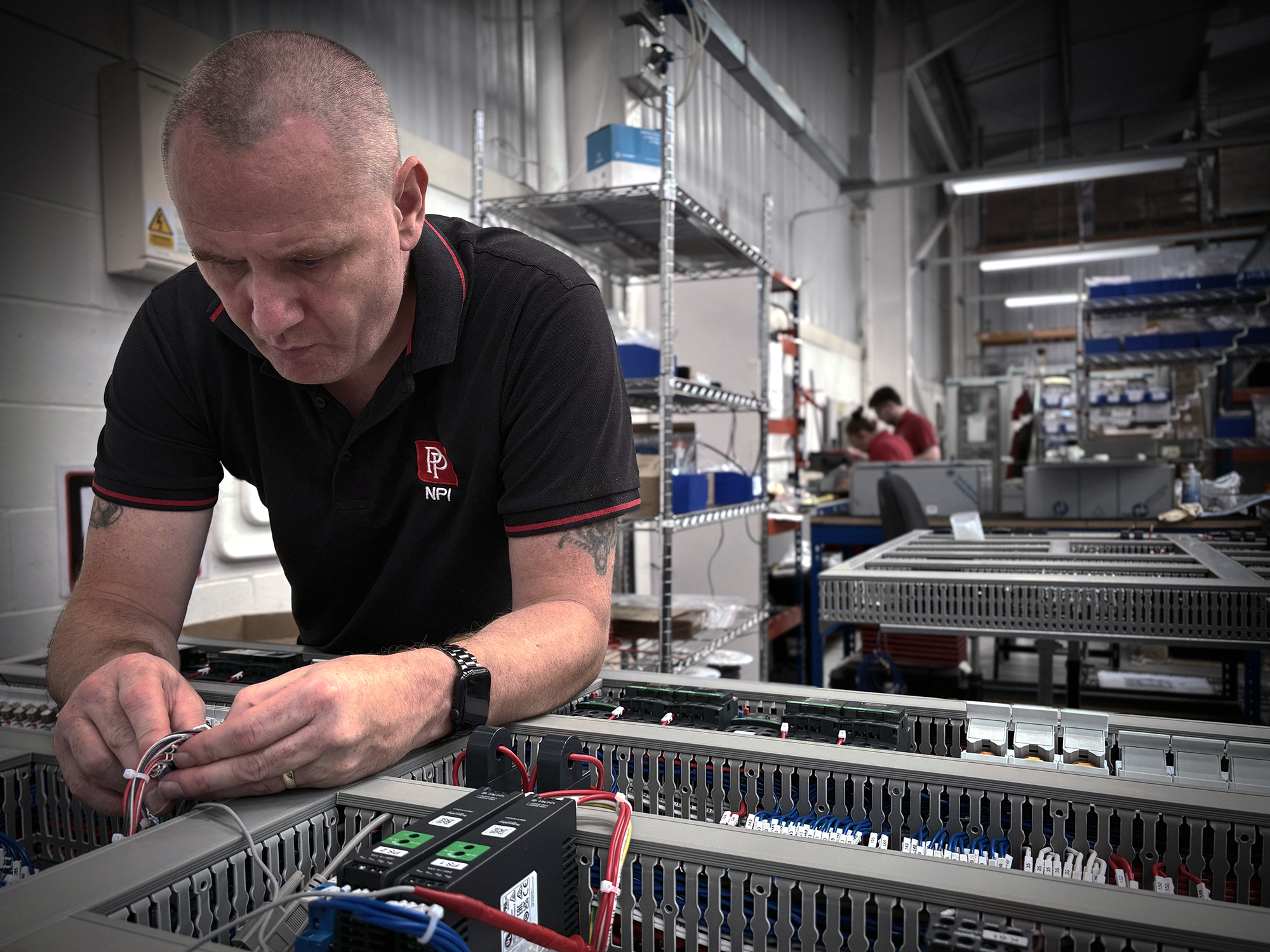
Specialist panel builders may be expected to handle more projects, higher volumes and tighter delivery schedules – all whilst continuing to meet rigorous quality, documentation and compliance requirements. A delay involving a relatively small control or auxiliary panel can affect a much larger programme if it prevents testing, commissioning or energisation.
In that context, protection and control capacity should not be treated as a downstream procurement consideration. It is much improved when planned as a strategic part of project delivery. A different supply-chain model, you could argue.
The scale of the grid programme will require ICPs, EPCs, DNOs, IDNOs and technology providers to reconsider how specialist manufacturing capacity is secured.
Relying entirely on a small number of established suppliers could create bottlenecks when demand peaks. My research and evidence collection verifies that this is already happening on our shopfloors.
Expanding permanent internal capacity may be expensive, slow and difficult to justify where project volumes fluctuate. Spreading work across multiple smaller suppliers can add interfaces, inconsistency and coordination risk.
A more resilient model is to develop long-term relationships with manufacturing partners that can add scalable capacity around the core project team. It is this positioning that has secured PP Control & Automation a considerable share of energy sector work over the past couple of years – and it is growing.
Importantly, this doesn’t mean outsourcing responsibility. The basis for the outsourcing relationship is centred on creating a more integrated delivery structure in which design, procurement, manufacture, assembly, testing and documentation are considered together.
Standardisation and modularisation can also play an important role. Where repeatable architectures, approved components and defined build standards can be established, project teams can reduce engineering duplication, improve consistency and make it easier to manufacture at scale.
Parallel design and build activity can further compress programmes, provided communication, technical governance and change control remain strong.

Building the infrastructure behind the infrastructure
PP C&A has spent more than five decades manufacturing complex control systems and electrical assemblies. Today, that capacity can support a wide range of grid and energy applications, including protection and control panels, SCADA and RTU systems, LVAC and DC battery charger panels, switchgear controls, transformer protection, metering, marshalling and renewable or battery-storage integration.
Through collaboration with specialist electrical, civil and structural engineering partners, PP C&A has also supported a more connected design-and-build approach for grid connection and substation projects. And in this, we’ve recognised a value proposition the market was crying out for.
The approach is intended to reduce unnecessary handovers, improve buildability and give project teams access to scalable manufacturing capacity when internal or incumbent resources are under pressure. It also allows engineering and manufacturing activities to progress in parallel, helping reduce delays without compromising the quality and compliance expected from critical infrastructure.
Britain’s grid upgrade represents an enormous opportunity for the energy sector and the wider UK economy. But investment targets will ultimately be judged by what is successfully built and connected.
Protection and control may be largely hidden from public view, but it will be central to whether Britain’s grid ambitions move from an ambitious vision to operational reality. The country needs the engineering capability, manufacturing capacity and the supply-chain collaboration. Time to step up and deliver.
PP Control & Automation, which employs over 200 people at its state-of-the-art facility in the West Midlands, is a strategic outsourcing partner for many of the world’s leading machine builders and OEMs, providing module or assembly-based, part or full machine build production capabilities.
