
5 min read • published in partnership with Atlas Copco
The spice is right: Fajita kit maker reduces carbon emissions with Atlas Copco technology
At Santa Maria’s Milton Keynes facility, best known for producing fajita kits, seasonings, salsas and tortillas, nitrogen is an essential part of the production process. It is used in the final product as a 30 per cent filler gas within modified atmosphere packaging (MAP) as well as to blanket bulk silos, protecting ingredients from oxidation and helping maintain shelf life and product quality. Until recently, nitrogen was supplied in liquid form and delivered to the site throughout the year.
As part of a targeted capital investment project, aimed at reducing environmental impact while strengthening operational control, Santa Maria UK – part of the Paulig Group – began exploring whether generating its own nitrogen on site could provide both sustainability and financial benefits.
Working in partnership with Atlas Copco and compressor installation and servicing specialist T&G Compressors, the company has now transitioned to an on-site nitrogen generation system supported by new compressed air and air treatment equipment. The result is an estimated carbon reduction of 12 tonnes of CO₂ per year.
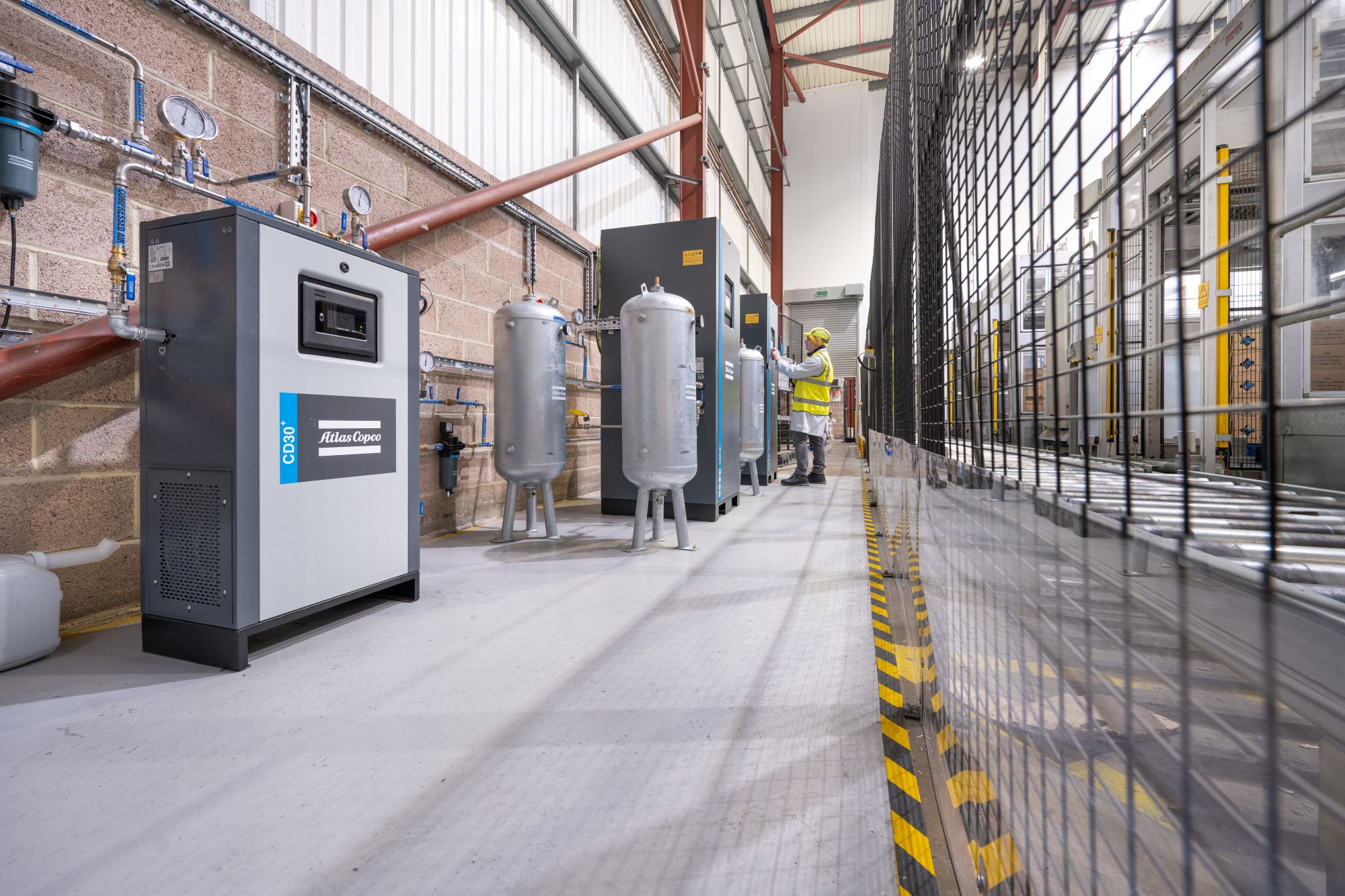
Fajita kit maker Santa Maria has reduced its carbon emissions by 12 tonnes, saving £56k in energy costs in the process.
Rethinking purity and supply
Santa Maria’s previous model relied on bulk liquid nitrogen produced off-site and transported via lorry to Milton Keynes on a regular basis. While dependable, it carried both a logistical and environmental cost associated with energy-intensive production and recurring deliveries. It also raised an important technical question about what purity of nitrogen was required.
Bulk liquid nitrogen is typically supplied at 99.999 per cent purity. For food packaging applications, however, regulatory requirements focus on oxygen content rather than ultra-high purity. To qualify as food grade, nitrogen must contain less than 1 per cent oxygen, meaning any gas above 99 per cent purity meets the required standard for modified atmosphere packaging and silo blanketing.
Atlas Copco therefore sized the on-site NGP+ system to deliver 99.5 per cent purity. This provides a clear compliance margin above the food grade threshold, while avoiding the additional compressed air demand and energy consumption associated with producing ultra-high purity nitrogen that the process does not require.
Higher nitrogen purity requires greater compressed air input and longer adsorption cycles in PSA systems, increasing power consumption. By generating nitrogen to the required specification rather than the maximum possible purity, Santa Maria UK benefits from improved operating efficiency and lower lifecycle energy demand. The configuration also enabled the use of smaller equipment, reducing the overall capital investment and delivering a more compact footprint within the factory.
From an environmental perspective, the impact of removing bulk supply is measurable. Based on the site’s requirement of 17 Nm³/h over 8,000 operating hours per year, emissions linked to liquid nitrogen production and delivery totalled 25,079 kg of CO₂ annually. By contrast, the new on-site nitrogen generator, operating over the same period, is set to produce annual emissions of 12,747 kg of CO₂. The transition, therefore, represents an overall carbon reduction of approximately 49 per cent.
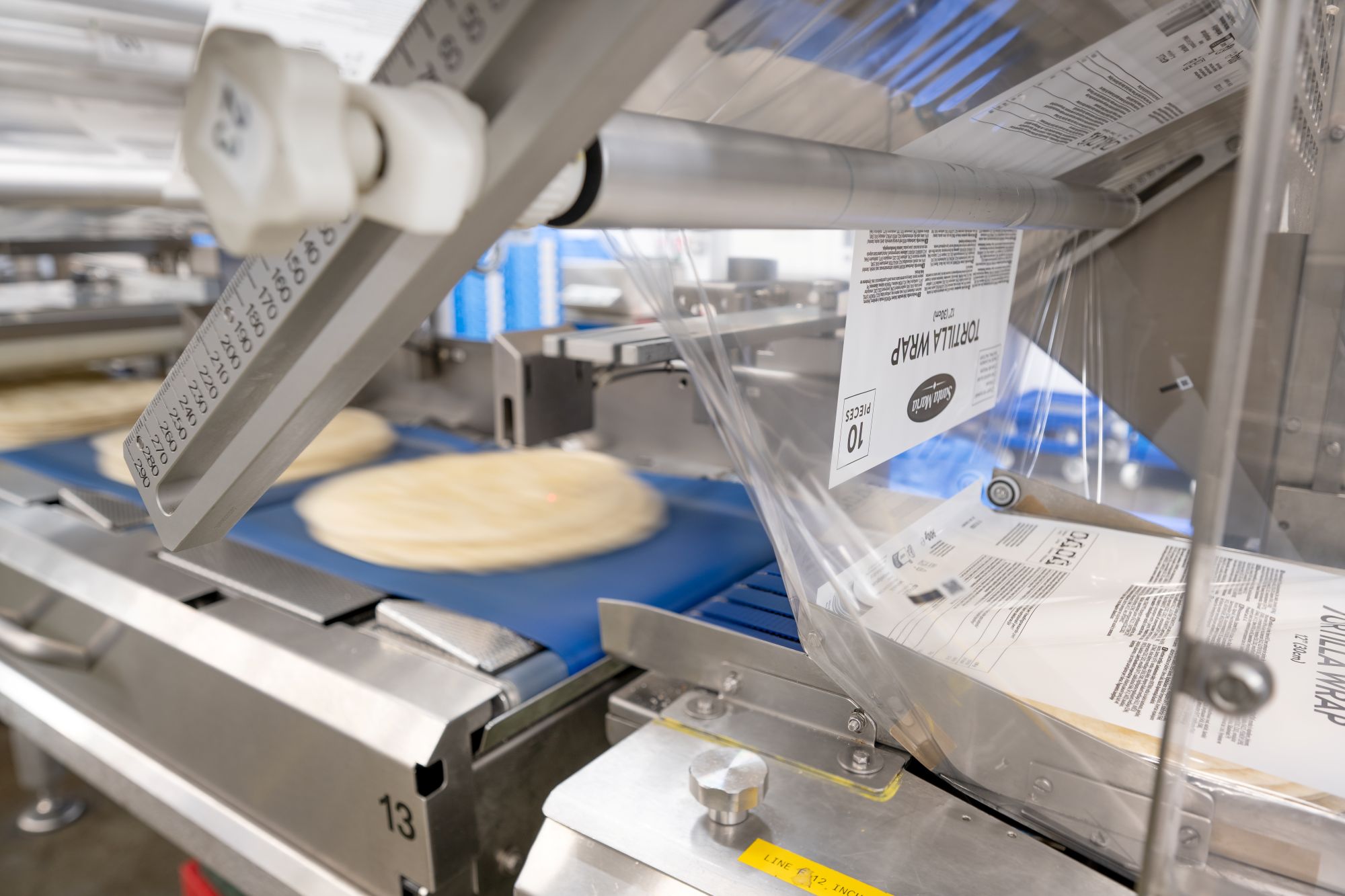
The project has also helped the Milton Keynes-based manufacturer strengthen its supply resilience by reducing its reliance on delivered nitrogen.
“We were looking at ways to make a genuine environmental improvement,” says Paul Godfrey, project engineer at Paulig Group. “When you consider the emissions linked to producing and transporting liquid nitrogen, moving to on-site generation made clear sense. Just as importantly, the system delivers the purity we require for food production, comfortably above the 99 per cent threshold, without producing gas to a higher specification than the process demands.”
Specifying a resilient solution
Following an initial site assessment – conducted by T&G Compressors – and a review of gas usage data, Atlas Copco specified an NGP12+ PSA nitrogen generator, capable of delivering up to 17 Nm³/h at 99.5 per cent purity. The installation was configured in a duty-standby arrangement, with a second nitrogen generator in place to ensure continuity of supply. In the event of a production stoppage or maintenance intervention, the standby unit can automatically take over, maintaining nitrogen provision to the packaging lines.
To supply the nitrogen generator, Santa Maria UK installed a GA11 VSD, an 11-kW variable speed rotary screw compressor, providing a dedicated and energy-efficient compressed air source. This is supported by a WSD75+ moisture separator and a CD30+ desiccant dryer delivering a minus 40°C pressure dew point.
A comprehensive filtration package, including a QDT activated carbon tower and high-efficiency particle filters, completed the air treatment system. Together, these components ensure that the compressed air feeding the nitrogen generator meets ISO 8573-1 air quality standards for particles, water and oil content.
Maintaining this air quality classification is critical. PSA nitrogen generators rely on clean, dry compressed air to protect the carbon molecular sieve beds and ensure consistent downstream gas purity. By treating the inlet air to ISO 8573 standards before separation takes place, the system safeguards both generator performance and nitrogen quality for food production.
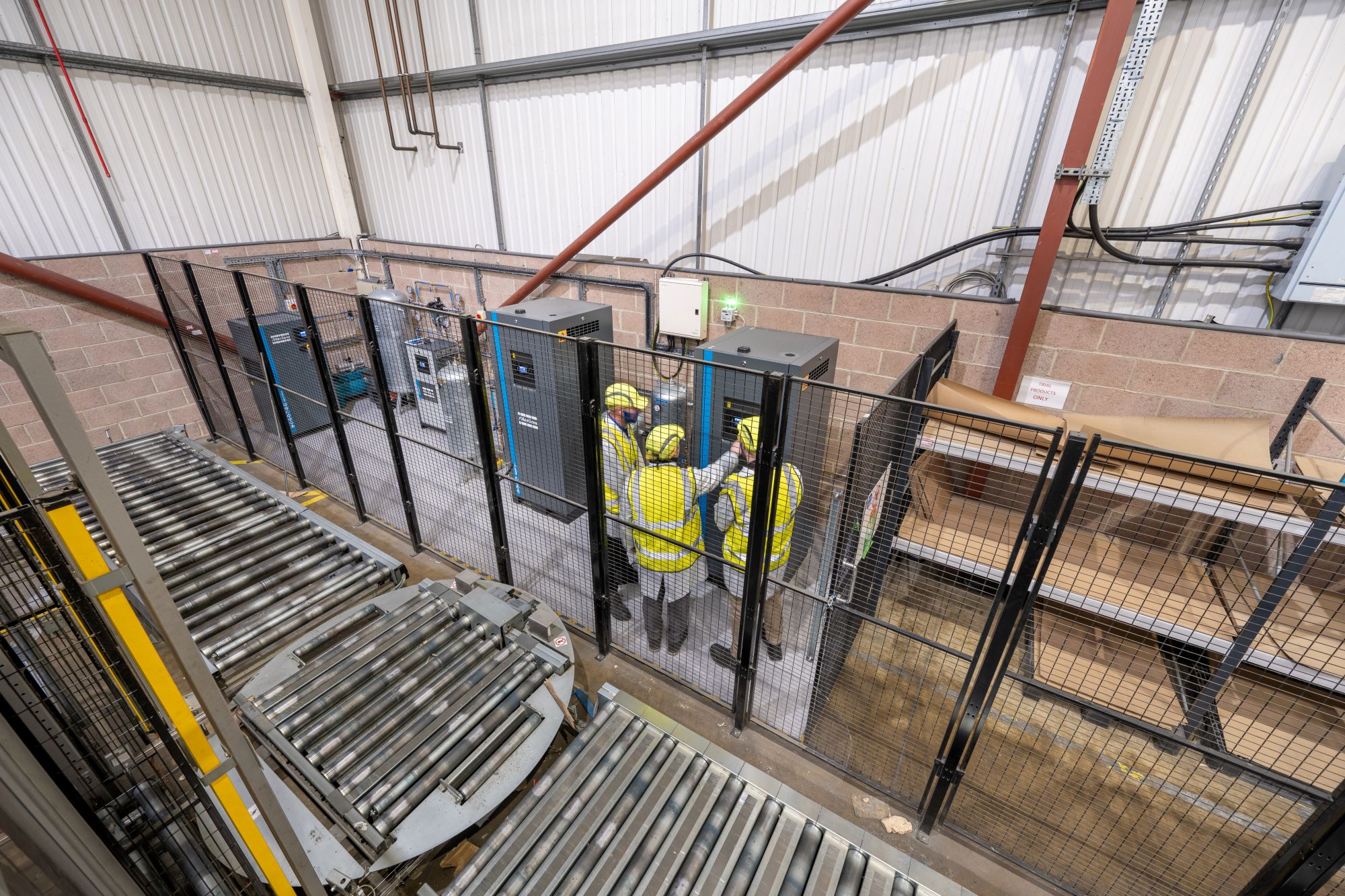
Santa Maria UK is the first site within the wider Paulig group to adopt on-site nitrogen generation, delivering annual savings of £56,243.
Financial benefits
While the environmental case was compelling, the strength of the return on investment ultimately made the project an easy decision. Instead of ongoing expenditure tied to liquid nitrogen deliveries, tank rental and potential supply volatility, Santa Maria UK now operates its own on-site nitrogen generation system with predictable electricity and servicing costs. The installation is projected to deliver annual savings of £56,243, with a projected payback period of approximately one year.
Installation was delivered by T&G Compressors, with Atlas Copco commissioning the system. The equipment is situated within the factory environment and was integrated into existing operations without disruption to production. “Nobody has noticed any difference on the factory floor,” Godfrey adds. “That was the key indicator for me that everything was working exactly as it should.”
A blueprint for wider adoption
For Atlas Copco, the project illustrates how on-site gas generation can support both sustainability objectives and operational resilience. Oliver Ford, business development engineer for Industrial Gases at Atlas Copco, said: “By moving from bulk liquid supply to on-site nitrogen generation, Santa Maria UK has removed the emissions associated with production and transport while gaining full control over its gas supply. The system is sized for peak demand, includes redundancy, and delivers the required purity for food applications. The outcome is a measurable carbon reduction of more than 12 tonnes per year alongside a rapid financial payback.”
Santa Maria UK is the first site within the wider Paulig group to adopt on-site nitrogen generation. Daily operational checks have been incorporated into routine site walk-arounds, and Santa Maria UK is implementing energy monitoring to compare ongoing electricity costs against historic liquid nitrogen expenditure. With performance data now being gathered and validated, the Milton Keynes facility provides a model for other factories considering similar investments.
“I’m genuinely impressed with the system,” says Godfrey. “It’s delivering exactly what we were promised. If it makes sense for our site, there’s no reason it couldn’t be adopted elsewhere.”
For a business built on consistent flavour and quality, the right atmosphere inside every pack is essential. By generating its own nitrogen gas on site, Santa Maria UK has demonstrated that environmental improvement and operational efficiency can be achieved together, without compromise.
